Dosificado de pintura

In an increasingly efficiency-oriented industrial world, innovation is no longer a luxury, but a necessity. This became more than clear in the recent webinar we organized, where an ingenious and promising solution was presented: the use of 3D printed nozzles to optimize paint dosing.

The session, led by our Commercial Director Carlos Pacha and starring Sergi Dunjó (product manager of the filling line) and Sila Ataman (plant chemical engineer at Azko Nobel), brought together an audience interested in advances in additive manufacturing applied to packaging equipment. And the premise was clear from the start: 3D technology is not the future, it’s the present.

From design to implementation: the technical path

Sergi Dunjó was in charge of explaining the most technical part of the project. He explained how the Oliver + Batlle team has integrated 3D printing in the redesign of nozzles for filling products of different viscosity. The focus, as he detailed, is on reducing filling cycles, improving accuracy and allowing greater adaptability in the process.

One of the most interesting aspects was the versatility of these nozzles: the same part can be used both with clamp clamping systems and with the new 3D-printed fasteners, which allows retrofits without the need to modify the entire machine.

From the lab to the plant: Sila’s testimony

For her part, Sila Ataman shared her first-hand experience in the plant during trials with these nozzles. Previously, several products were impossible to fill successfully, even after trying different types of conventional nozzles. “With this new nozzle, filling was smooth and successful,” he said. In addition, he noted that component cleanliness – one of the most uncertain points – was satisfactorily performed using the usual solvents. Although they have not yet tested color changes between cycles, Sila is confident that nozzle cleaning will not be a problem.

In conclusion, his recommendation was clear: “If you have products that are difficult to fill, give this nozzle a try”.

Concrete results and vision for the future

Among the most notable improvements, Sergi mentioned an increase of up to 20% in filling capacity, simply by integrating the printed nozzles into existing equipment. This not only means an increase in productivity, but also potential savings in operating costs.

When asked about the scope of 3D printing in other areas of filling equipment, he was blunt: “It’s not a technology of the future, it’s of the present. We are already using printed parts in other parts of the equipment with excellent results”.

As for commercial availability, it is still in the R&D phase, but a market launch is expected early next year.

Beyond the prototype

The event closed with an invitation to collaboration and open dialogue. Oliver + Batlle made it clear that its commitment to innovation does not stop at the prototype, but is designed to transform the coatings industry from its operational core.

A 3D printed nozzle may seem like a small change, but in the hands of a company that thinks big, it becomes a revolution.


fabricación de pinturas y tintas

Introduction

Oliver & Batlle began using vacuum loading systems in complex industrial applications many years ago. The experience gained with difficult-to-handle powdered products such as Aerosil, carbon black, glass microspheres and bentonite prompted O+B to develop an R&D project focused on creating a specific solution for this application: the vacuum loading system for powdered raw materials, called DISPERVAC.

DISPERVAC solves the problem of loading raw materials that are difficult to handle due to their volatility, dirtiness, contaminating characteristics or health risks.

Several chemical industry machinery manufacturers have been introducing inline mixing systems to the market for years for the incorporation of powdered raw materials into dispersion processes. With the aim of offering a robust and competitive alternative, Oliver & Batlle developed the DISPERVAC system, which combines vacuum feeding of solids with the Polimix dispersion system, achieving a highly efficient, safe, and versatile solution. After analysing the various processes available on the market, we believe our DISPERVAC technology is also particularly interesting for incorporating pigments such as titanium dioxide (TiO?), which is widely used in the paint industry for its hiding power and colorimetric performance but is difficult to handle and expensive.

In the next article, we will present some ideas that will support the promotion and use of the DISPERVAC system, which we hope will be of interest to you.

Advantages of vacuum loading of powdered products with the DISPERVAC system in paint and ink manufacturing

Nowadays, pigment cost is one of the most significant factors in the manufacturing of paints and inks. Reducing pigment usage can represent a considerable cost savings and improve overall process profitability.

One of the most widely used pigments is titanium dioxide (TiO?) a costly and difficult-to-handle material. Depending on the formulation, it can suppose for 25% to 40% of the total production cost. There has long been ongoing discussion around the possibility of classifying TiO? as a carcinogenic substance, which could eventually lead to regulations restricting its use.

In anticipation of such a scenario, Oliver + Batlle has developed a vacuum powder loading system compatible with dispersion machines, designed to streamline the handling of powdered pigments and facilitate their safe and efficient incorporation into the production process.

Vacuum loading of powdered pigments in paint and ink manufacturing offers major advantages, especially for dispersing pigments such as TiO?:

  1. Enhances the colorimetric strength of the pigments.
  2. Allows for reduced pigment usage, as air-free dispersions ensure better particle distribution and more efficient processing, avoiding the “airbag effect” caused by excess air.

DISPERVAC: An ultra-efficient vacuum dispersion method

The DISPERVAC system consists of two main units:

  • A powder handling and transfer system, equipped with vacuum technology. 
  • A production unit based on coaxial conical dispersion technology, specifically designed to operate under vacuum conditions. 

The vacuum handling system is particularly suitable for highly volatile or fine powders, such as aluminum silicates or glass microspheres, as well as for various pigments and fillers like TiO?, calcium carbonate, talc, or silica. Oliver + Batlle offers the system in two configurations:

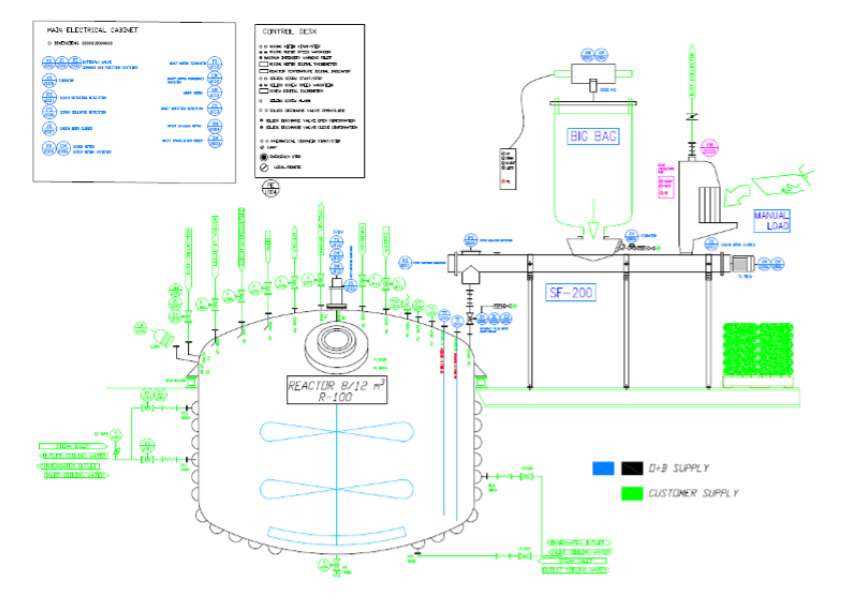
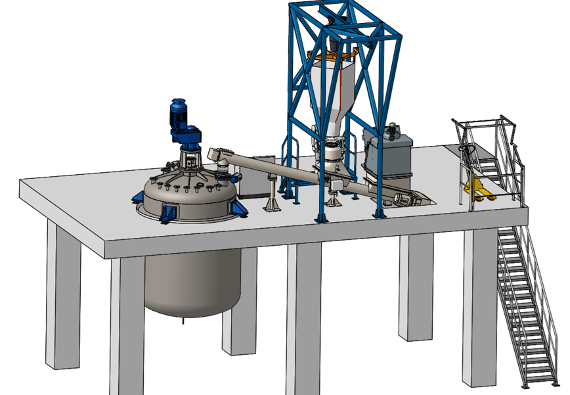
  • With a sealed vessel where the full powder formula can be prepared, as shown in the diagram:

  • With solutions adapted to powders supplied in big bags or standard 25 kg sacks.


In the first case, the preload hopper can be used to prepare the powder mix before transferring it to the manufacturing unit.

The vacuum system is used for two main operations:

  1. Powder raw material loading 
  2. Air extraction from the finished product 

DISPERVAC can be fully parameterized for each product, allowing a wide range of powders to be handled regardless of their bulk density or particle size.

The production unit must be airtight and designed for vacuum operation. For maximum dispersion efficiency, we recommend using a Polimix vessel of conical trunk form equipped with two coaxial agitation systems:

  • A dispersing unit with one or two turbines featuring lift/lower mechanisms. 
  • An anchor-type homogenizer with flexible wall scrapers to ensure optimal mixing. 

These machines are highly efficient in dispersion processes, since vacuum loading takes place from the bottom of the vessel, enabling immediate incorporation of pigments into the liquid flow generated by the dispersion turbine. This avoids pigment floating or surface accumulation, which is common in top-loading systems.

The conical shape conduces the powders directly into the primary turbine, allowing the process to begin with a minimal amount of liquid. When using an appropriate dispersant—in both type and quality—excellent dispersion results are achieved.

The DISPERVAC system allows the handling of powdered products by vacuum, completely avoiding dust emissions during loading and associated material losses. It is particularly suitable for low-density products or those requiring special handling conditions due to health hazards for plant operators—such as TiO?.

The vacuum suction system can be fully programmed, allowing pigments to be introduced into the formulation at a controlled and repeatable feed rate.

The adition of pigments in paint and ink manufacturing is a critical and sometimes complex operation. With the programmable DISPERVAC system, a precise and repeatable process is guaranteed, enabling the optimal incorporation of pigments free from entrapped air. This air-free dispersion improves pigment performance, increases color strength, and reduces raw material costs in formulations.


What kind of manufacturing equipment is used in a DISPERVAC installation? 

Using dispersers equipped with saw-tooth turbines or HDM-type turbines, as traditionally done, remains an effective method—especially when operating with tanks whose geometry enhances turbine efficiency, such as trunk conical shapes.

This geometry allows the dispersion phase to begin with minimal liquid volume, increasing the effectiveness of the turbines. In large-capacity machines, a small turbine can be placed at the bottom and a second, larger one in an intermediate position. Even when both turbines operate simultaneously, the required installed power does not need to be high.


Comparing the DISPERVAC system with inline mixing processes

Inline vacuum dispersion systems promoted in the market often claim the advantage of lower installed power. However, this argument must be linked to the speed of the dispersion process.

To achieve faster dispersion times than a traditional disperser—and to ensure sufficient suction capacity for powdered pigments—inline mixers must operate at very high speeds, which in turn requires high power consumption (according to available technical data, some machines reach up to 110?kW).

Additionally, inline mixers require a recirculation and homogenization tank, which also needs to be equipped with an agitator. The required power for this agitator depends on the batch volume. In total, the combined power requirement of an inline system often exceeds that of a Polimix coaxial trunk conical disperser.

Another often-overlooked challenge in inline dispersion systems is the temperature rise within the dispersion chamber. This can be particularly problematic for solvent-based formulations containing volatile or flammable components.

Moreover, air removal from powder-based raw materials during the inline dispersion process is only possible if a dedicated vacuum system is installed—something that is frequently not included in standard configurations.

Air removal during the DISPERVAC manufacturing process

Many pigments used in the production of paints and inks contain entrapped air, which can account for 25% to 30% of their volume. When vacuum loading is applied, a small amount of air is introduced to help transport the powder into the disperser.

Additionally, saw-tooth turbine dispersers tend to incorporate small amounts of air during the shearing process. While the presence of air at certain points during pigment dispersion can aid in wetting the pigment particle surfaces, it can become problematic later in the process.

Excess air at the end of production may lead to volume instability or air bubbles appearing during application. With the DISPERVAC system, these issues are eliminated, as the same vacuum system used for loading can also extract residual air from the final product.

An air-free production process ensures a more uniform particle distribution and prevents foaming or bubble formation during paint or ink application. In printing inks, the removal of air enhances gloss and visual performance.

Foam caused by air entrapment in conventional dispersion processes is often corrected by adding defoamers. However, manufacturing with DISPERVAC allows for vacuum-based air extraction, significantly reducing—or even eliminating—the need for antifoaming agents and consequently lowering formulation costs.


Pigment and filler incorporation with the DISPERVAC system

In a traditional water-based decorative paint manufacturing process using cylindrical tanks, the dispersion of TiO? usually starts with the maximum amount of liquid possible to create a large enough volume for powder incorporation.

In contrast, the DISPERVAC installation, which uses trunk conical-shaped dispersers, allows for a different strategy: taking advantage of the conical bottom to work with the minimum required liquid volume, enabling TiO? to be dispersed more efficiently, achieving better particle size distribution and higher color development.

In a second phase, more liquid is added, followed by the fillers. This two-step sequence, with varying amounts of wetting liquid, optimizes the tinting strength of TiO?.

This sequence can be easily executed using the DISPERVAC control system, allowing for fully programmable stages. By dispersing TiO? first, improved final product quality and reduced TiO? consumption are achieved.


Manufacturing of TiO? slurries and intermediate products

The DISPERVAC system is effective for producing high-quality slurries. The programmable vacuum powder charging system ensures optimal product quality and excellent traceability throughout the manufacturing process.

The continuous slurry manufacturing system can be replaced by a DISPERVAC process using high-capacity dispersing equipment, enabling the production of up to 24 tons of slurry per single formulation. Smaller batches can also be produced with the same guaranteed quality.


Summary of advantages of vacuum pigment charging with the DISPERVAC system:

  • Increases the colour strength of pigments.
  • Allows reduction in the amount of pigment used in manufacturing.
  • Enables complete extraction of manufacturing air before packaging.
  • Reduces manufacturing cycle times.
  • Reduce the amount of defoamer required in the formulation.
  • Permits programmed charging of pigments and dispersants through the control system.
  • Final batches have manufacturing traceability and uniform quality guaranteed by the charging control system.

Conclusion: DISPERVAC, a breakthrough in dispersion and vacuum charging processes

In summary, the DISPERVAC system represents an innovative and efficient solution for the handling and dispersion of powdered raw materials in paint and ink manufacturing. Its vacuum charging technology not only enhances process safety and ergonomics but also optimizes the technical and economic performance of formulations, especially in the handling of critical pigments such as titanium dioxide.

The combination of controlled feeding reduced entrapped air, and the ability to parameterize each operation enables superior final product quality, with greater consistency, lower cost, and improved sustainability. Oliver + Batlle thus reaffirms its commitment to innovation and excellence in industrial processes by delivering solutions that address the current challenges of the sector.


dispervac request information


Innovation and efficiency in pigment incorporation in the chemical sector

SIKA, founded in Switzerland in 1910, is a global leader in specialized chemical products for industries such as construction, automotive, and renewable energy. With operations in over 100 countries, the company stands out for its commitment to innovation, sustainability, and high performance across all its products.

SIKA’s product portfolio includes solutions for concrete additives, waterproofing, adhesives, repair and reinforcement of structures, as well as roofing and facade systems. Their commitment to quality and efficiency has enabled them to maintain a strong presence in the global market.

More information: SIKA

The challenge: Efficient pigment incorporation without compromising quality or efficiency

SIKA needed a solution to incorporate pigments hygienically and efficiently in the production of tinted oil, a key component in several of their products. Proper pigment suspension and dispersion in the oil are essential for ensuring high quality and consistency in the final product.

The specific requirements for the project included:

  • Avoiding dust emission during the operation.
  • Preventing cross-contamination between pigments while working with various shades.
  • Minimizing waste during the pigment incorporation process.
  • Ensuring minimal investment, with a focus on resource optimization.
  • Controlling a finished product viscosity range varying between 100cP and 20,000cP, which adds a challenge to maintaining both quality and flow of the mixture.

The O+B solution: Innovative technology tailored to customer needs

To address this challenge, O+B began with a phase of pilot plant tests to validate the technical feasibility of the proposed solution. These tests were essential for determining the key parameters of the process, focusing on two main aspects:

  • Determining the minimum pneumatic transport speed required to ensure that the pigments were properly transported to the mixer-disperser without losing efficiency.
  • Establishing the maximum speed to avoid the pigments transferring into the liquid, which would cause splashes and possible spillage.

With the results obtained from these tests, O+B proposed an optimized industrial solution that was also economical, involving a vacuum loading and dispersion system to incorporate 8 pigments efficiently and without contamination. This system was implemented in a Dispermix O+B, specifically designed to ensure a hygienic and precise process.

Start-up tests: Performance and efficiency in action

During the start-up phase of the solution, the following data was verified:

  • 300 kg of gray pigment incorporated in 20 minutes, meeting the system’s expected capacity.
  • Only 100 g of solid pigment passed through the filter, representing an 0.03% loss, an exceptionally low figure that highlights the efficiency and precision of the system.

    These tests confirmed that the system was highly efficient, maintaining the quality standards required by SIKA.

Results achieved: Performance, hygiene, and efficiency

The system implemented by O+B has allowed SIKA to achieve efficient pigment incorporation without contamination, resulting in a cleaner production process with minimal waste. The outcomes are as follows:

  • Reliability in the process, with controlled pigment incorporation.
  • Resource optimization, significantly reducing waste in the process.
  • Compliance with SIKA’s stringent quality standards, ensuring a homogeneous and consistent product.
  • Constant and safe performance, with a fully automated system that provides greater process control.
  • High operational efficiency, improving productivity and reducing downtime.

The technology implemented not only guarantees constant and secure performance but also optimizes the efficiency of every phase of the production process, from initial loading to final dispersion.

This project demonstrates how O+B can deliver innovative and tailored solutions that enhance quality, efficiency, and sustainability in industrial processes. The implementation of this technology has strengthened SIKA’s commitment to excellence, ensuring the highest quality in the production of tinted oils and other products.


accessories for the automation

A high-precision project in the heart of the cosmetics industry

COBELSA Cosméticos S.A., located in Alcalá de Henares (Spain), is part of the L’ORÉAL Group and specializes in the production of nail polish for international brands such as Maybelline and Color Riche. All production is destined for markets in Europe, Brazil, and the United States.

As part of its continuous improvement strategy, COBELSA turned to Oliver + Batlle to develop a new manufacturing unit for bentone gel, a key ingredient in nail polish formulas, acting as a rheological agent that ensures the suspension and stability of pigments and resins.

The challenge: safety, precision and automation in a confined ATEX zone

The project came with several critical technical challenges:

  • Extremely limited installation space
  • Location in a classified ATEX II GD zone, due to the presence of solvent vapors and bentonite dust
  • Vacuum powder feeding of explosive bentonite into a flammable medium (butyl acetate + nitrocellulose)
  • Manufacturing process requiring a permanently inert atmosphere (O? < 6%) to prevent premature drying
  • A fully automated and traceable control system

O+B was tasked with delivering a compact, safe and high-performance solution tailored to these conditions.

O+B’s solution: compact engineering in a skid-mounted system

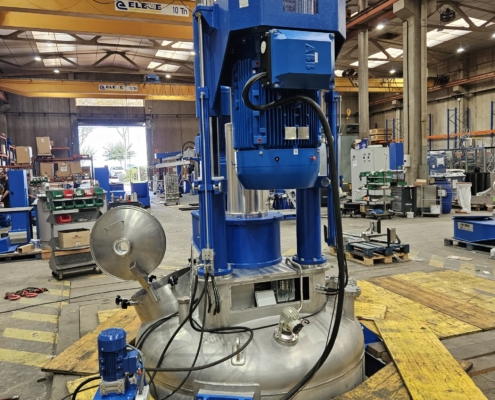
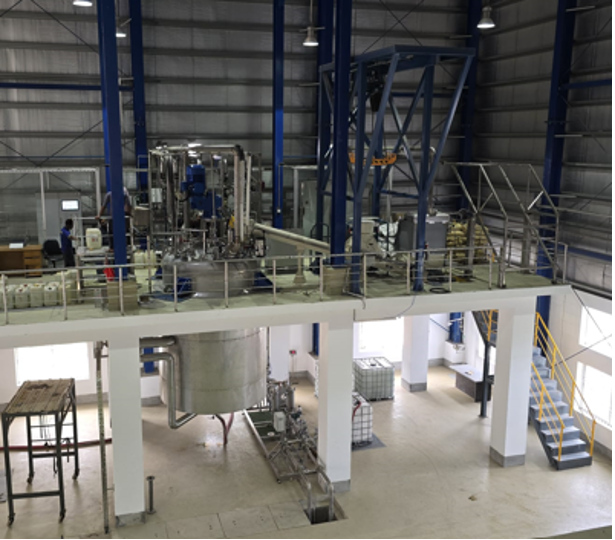
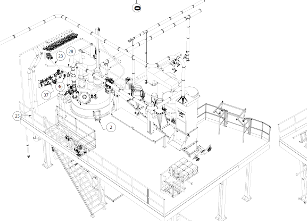
O+B’s technical team designed a complete and autonomous skid, optimized for integration into the ATEX environment and adapted to the space constraints of the plant, consisting of:

Working platform

1. POLIMIX DPS-1200-OR Disperser

  • ATEX Zone 0 certified (internal)
  • Weighing system via load cells
  • Half-coil cooling jacket, product temperature probe and minimum level sensor
  • CIP cleaning system with automatic motorized lance
  • Liquid input via multi-way feed collector

2. Bentonite powder hopper

  • Stainless steel AISI 304, capacity 150 L
  • Vacuum suction lance for 25 kg bags
  • Vacuum monitoring via manovacuum gauge
  • Percussion hammer for complete discharge

3. Vacuum powder feeding system

  • Flameproof filter above the disperser
  • Flame arrestor + modulated vacuum valve
  • Side channel vacuum blower
  • Acid dispersion input by vacuum

4. ATEX safety & inert gas control

  • Grounding verification system for all components


  • Nitrogen inerting system (N2)

  • Oxygen monitoring sensors in both disperser and powder hopper

5. Fully automated control system

  • ATEX-rated HMI touchscreen in classified area
  • SCADA system in a safe zone with integrated recipe manager


Results: enhanced quality and safe, controlled production

The solution developed by O+B enabled COBELSA to:

  •  Comply with the most demanding ATEX safety standards
  •  Eliminate manual handling of explosive powders
  •  Maintain a stable inert atmosphere (O? < 6%) during the process
  •  Achieve higher gel quality compared to previous systems
  •  Fully automate and digitize the gel manufacturing process

This project demonstrates how modular engineering and technical expertise allow O+B to overcome complex challenges in sensitive environments. With this solution, O+B strengthens its position as a trusted technology partner in the cosmetic industry, where process control, product consistency, and safety are non-negotiable.


accessories for the automation

A new O+B Success story for Nippon Paint

A global client with a long-term vision

Founded in 1881, Nippon Paint is one of the world’s leading companies in the manufacturing of paints and coatings. With over 140 years of history, the Japanese company operates in more than 30 countries, offering innovative solutions for sectors as diverse as decorative, industrial, automotive, and marine paints.

In China, Nippon Paint has built a robust industrial ecosystem with plants specializing in the production of water-based decorative paint. These facilities are designed to meet the demands of a dynamic and highly competitive market, where production efficiency, automation, and environmental respect are key factors.

More information: nipponpaint-holdings.com/en/


The challenge: 30 tons of decorative paint per hour

The project’s objective was clear and ambitious: to design and install an automated line capable of manufacturing and packaging 30,000 kg of white decorative paint (water-based) per hour, with maximum reliability and precision. This was the third consecutive project that O+B carried out for Nippon Paint in China, following two similar installations in Xianning (Hubei) and Zhengzhou (Henan). This continuity reflects the client’s confidence in our ability to deliver high-performance turnkey industrial solutions


O+B’s technical solution: Comprehensive process automation

The project was developed based on a modular, highly automated solution that encompasses everything from raw material handling to final product packagingEach stage of the process was designed to maximize performance and ensure complete traceability

1. Raw material storage eight 300 m³ silos were installed to store powdered raw materials such as calcium carbonate, kaolin, talc, and titanium dioxide

2. Automatic transport and dosing of solids

A pneumatic transport system with a capacity of between 15 and 30 tons per hour feeds two waiting hoppers. Each hopper is dedicated to a group of raw materials: one for carbonate, kaolin, and talc, and another exclusively for TiO?, allowing for separate and precise management.

3. Automatic liquid dosing

The automated system manages the dosing of 18 emulsions and 40 liquid additives, ensuring precision, repeatability, and reduction of human errors.

4. Solid dispersion and mill base manufacturing

The critical mixing stage is carried out with a POLIMIX DPS-15000-OR coaxial disperser, capable of simultaneously incorporating solids from both hoppers. Its dispersion capacity of up to 50 tons per hour ensures very short cycle times and perfect product homogeneity.


5. Discharge and final homogenization

The mill base is discharged by gravity into two TA-22000 finishing tanks, designed to receive large volumes with continuous agitation, ensuring uniform mixing before packaging.


6. Performance validation

The analysis of the actual weight in the DPS-15000-OR and the two solid hoppers throughout a workday demonstrates that the system is capable of producing 30,000 kg of paint in less than 60 minutes, thus meeting the set objective.


7. High-speed automatic packaging

The finished paint is packaged using two automatic FLASH-25-TX lines, each equipped with PAILMANAGER-VX systems for feeding and handling 18-liter containers. This system allows a packaging rate of 14 containers per minute per line, with quick format change and minimal manual intervention.