acabado de pinturas, paint finishing

What does the paint finishing phase involve in the manufacturing process?

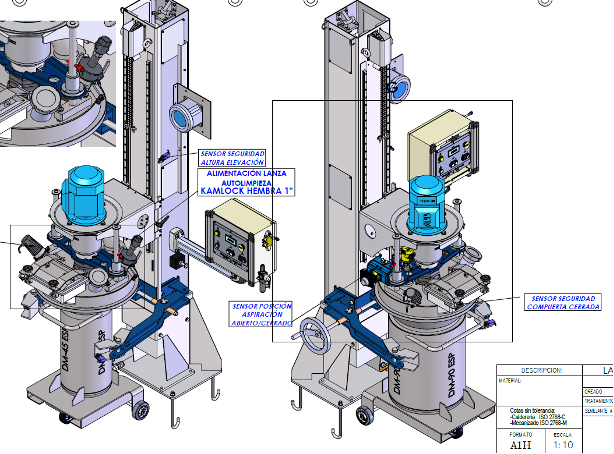
The paint finishing phase is one of the final stages of the manufacturing process before filtration and packaging.

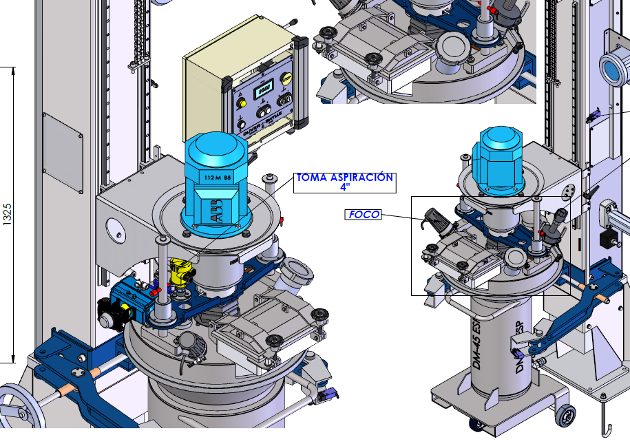
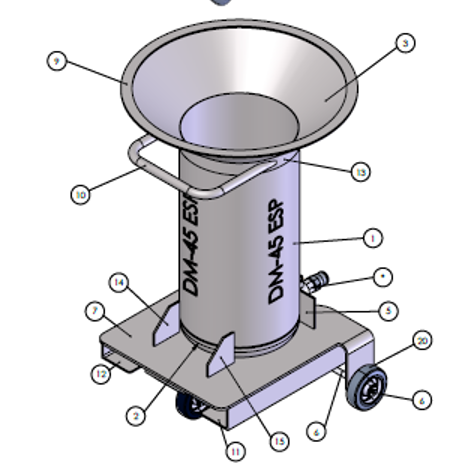
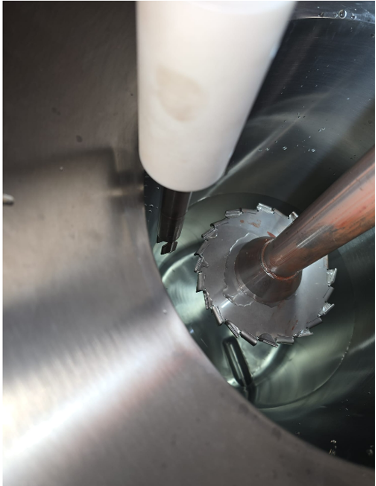
Following the dispersion and grinding stages, the product is finished or completed. During this phase, the final liquid components of the formulation—such as resins, emulsions, or solvents—are primarily incorporated using mixing systems with agitation turbines.

Unlike the previous stages, finishing generally requires gentle agitation, tailored to the product’s characteristics, to ensure these components are incorporated uniformly and to achieve proper homogenization.

The goal is to achieve the defined properties of the final product—such as viscosity, density, and color—before the subsequent filtering and packaging stages.

Read more

EUROTEX: Manufacturing and marketing of industrial and decorative paints, and waterproofing products

EUROTEX began its business activity in the early 1980s as a specialized paint store in Mairena del Alcor, Seville. In 1987, aimed at gaining greater control over its production processes, the company started manufacturing the products it sold and established its factory and headquarters in El Viso del Alcor.

Currently, EUROTEX manufactures and markets a wide range of products, including industrial and decorative paints, primers, sealers, and waterproofing materials.

What product does the plant manufacture?

The project was focused on the manufacture of water-based paints and other water-based products.

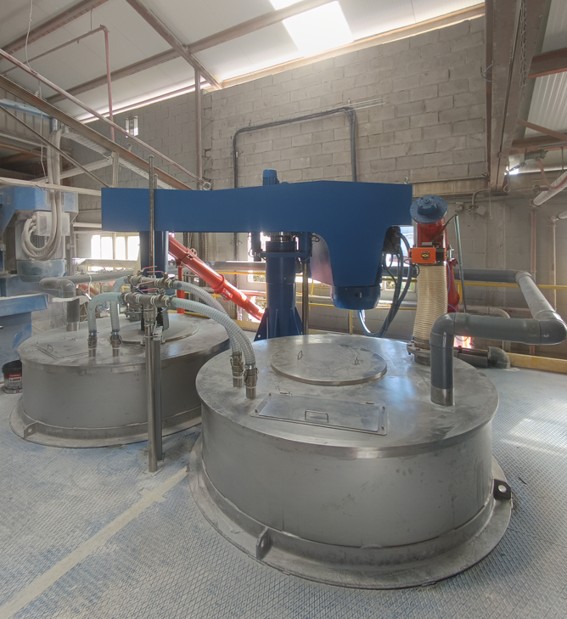
The process is carried out in two tanks, where the dispersion and finishing stages of the formulation take place. The product then passes through a pumping and filtration system before filling.

The Challenge: Design and integrate a new water-based coating production unit

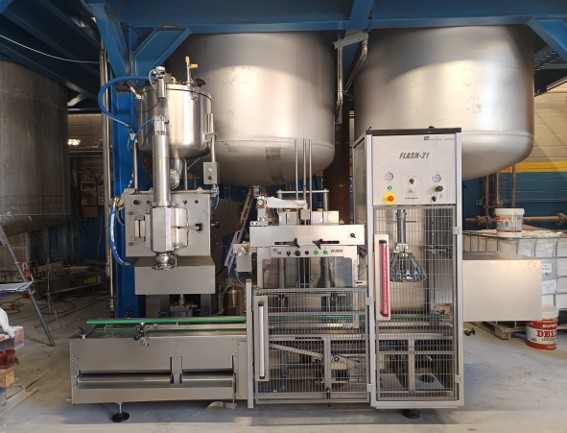
EUROTEX needed to install a new production unit for water-based products, consisting of a Dispermix VF-132-E high-speed disperser, two DE-7200 tanks, an MF-16 pumping and filtration unit, and a FLASH-21 volumetric filling machine.

The project presented three main constraints:

  • Tight Delivery Schedule: The installation had to be operational prior to the start of the production campaign, requiring a particularly demanding delivery schedule.
  • Limited Available Space: The new unit had to be integrated into an area with space and height restrictions. O+B designed a dedicated platform to accommodate the manufacturing equipment, taking into account the existing access points, its connection to an existing platform, and pallet access through safety gates.
  • Integration with third-party systems: The dispersion equipment had to be integrated with the solid and liquid feeding systems supplied by another vendor, requiring coordination among the different parties involved.

Oliver+Batlle’s Solution: A coating manufacturing unit tailored to space and process needs

Industrial machinery supplied for the production process

To meet the project requirements, O+B supplied the following equipment:

  • Industrial disperser: One Dispermix VF-132-E, equipped with a motorized crown for automatic head rotation, a telescopic cover with blade access port, an HDM Ø675 mm dispersion blade, and a bag support tray.
  • Process tanks: Two DE-7200 tanks to be installed on the platform, configured with a loading manhole and the necessary connections for powder and liquid addition, as well as dust extraction.
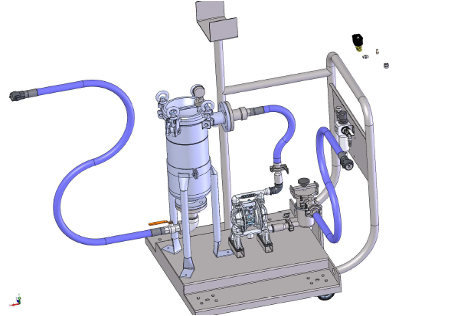
  • Pumping and filtration system: One MF-16 pneumatic pumping and filtering unit, designed for pumping and filtering the product manufactured in the DE-7200 tanks prior to filling.
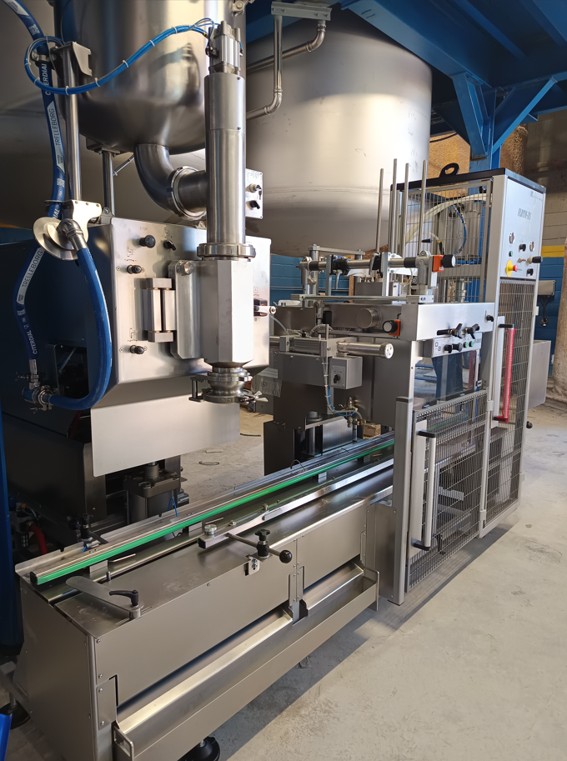
  • Automatic filling line: One FLASH-21 volumetric filling machine, featuring a TA-100-HD hygienic hopper, NE-20 electronic level sensor, AV-20 valve with actuator, SLT-20 cleaning system, and DT-350 lid dispenser.

Plant layout engineering, assembly, and commissioning

In addition to supplying the equipment, O+B developed the plant layout engineering for the various elements located both above and below the platform: disperser, DE-7200 tanks, pumping unit, and automatic volumetric filling machine.

To accurately define the equipment layout, site measurements were taken beforehand, and construction drawings for the manufacturing platform were prepared and agreed upon with the client.

The platform was designed and engineered by O+B and manufactured and installed by a third party.

Mechanical assembly of the equipment was carried out by an O+B technician. Moving the disperser and tanks into position posed an additional challenge due to the limited space and height available, requiring close coordination with the crane contractor appointed by EUROTEX.

Electrical and pneumatic installation works were carried out by the client and subsequently supervised by an O+B technician.

Finally, O+B carried out the plant commissioning, starting up and adjusting the machines for normal operation.

Platform layout drawing designed and calculated by Oliver + Batlle

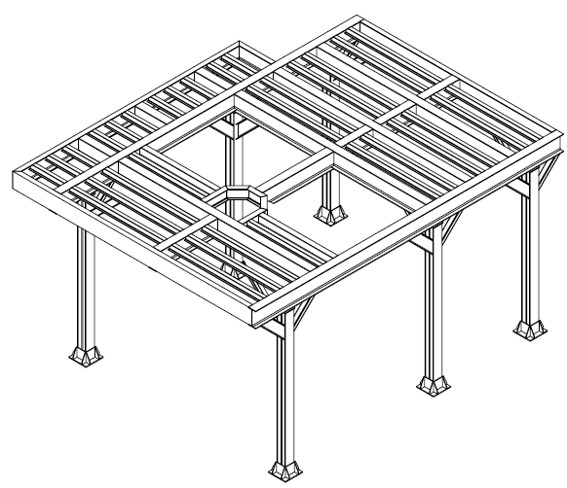
3D structural drawing of the platform

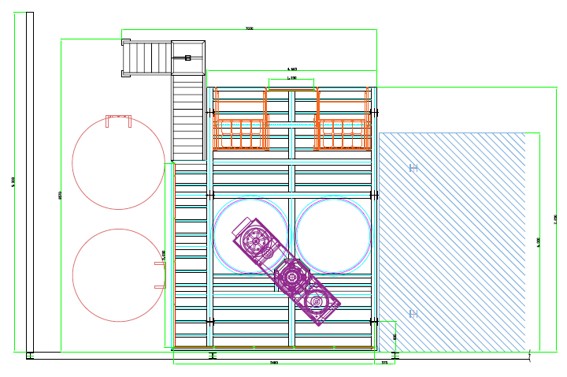
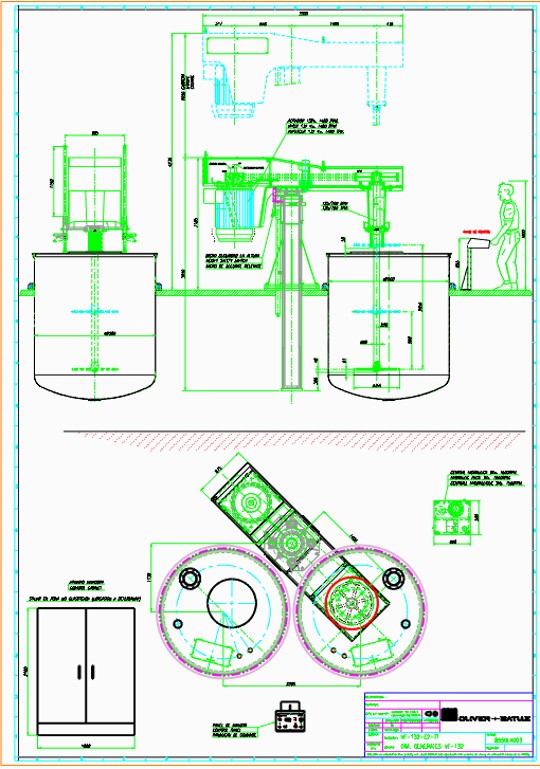
Plant layout drawing of the Dispermix VF-132-E and two DE-7200 tanks

Project Results

The new manufacturing unit enables EUROTEX to produce water-based coatings and meet customer demands in terms of both quality and turnaround times.

One of the main operational advantages of this configuration is the ability to stagger production and filling between the two tanks: while a batch is being filled from one tank, production of another batch can begin in the second tank.

This increased operational flexibility substantially enhances the plant’s overall production capacity.

Are you planning to expand your plant or add a new water-based paint manufacturing line?

At Oliver + Batlle, we specialize in the design and execution of custom process engineering projects for the paint and coatings industry. We develop turnkey solutions for the manufacture of water-based paints, varnishes, adhesives and inks, integrating dispersion equipment, filtration systems, filling lines and working platforms to maximize the efficiency, safety and productivity of your facilities.

Get in touch with our engineering team today to find out how we can help you expand your production capacity and integrate new equipment into your plant without disrupting your operations.

MIWON Spain: Manufacturer of UV resins for paints, adhesives, and inks

MIWON Spain S.L. is the Spanish subsidiary of the MIWON Group, an international company specializing in the manufacture of high-value-added specialty chemicals. From its plant in Manresa (Barcelona), it produces resins and raw materials for use in paints, coatings, adhesives, and inks, supplying customers in international markets. The company remains firmly committed to innovation, quality, and the development of more sustainable solutions for the chemical industry.

What product does the plant manufacture?

From its plant in Manresa, the company specializes in the manufacture of ultraviolet (UV)-curable resins, a technology that reduces atmospheric emissions and is used in paints, adhesives, and printing inks.

The Challenge: Design and integrate a new UV resin manufacturing plant

The project called for the construction of a new reactor area as an expansion of the existing production plant.
In addition to supplying new reactors, the new facility was to incorporate all the general utilities necessary to ensure the process’s operation and its integration with the existing industrial infrastructure.

The project presented several major challenges:

  • Integrating a new production area into an existing plant.
  • Incorporating the process equipment necessary for the manufacture of UV resins.
  • Designing and implementing the auxiliary services required for the operation of the new facility.
  • Ensuring functional integration with the plant’s existing infrastructure.

Oliver+Batlle’s Solution: Turnkey Engineering for a New Resin Manufacturing Plant

The core of the expansion consists of a new production area equipped with:

  • Two 20 m³ reactors.
  • One 13 m³ reactor.

All of them were supplied with the necessary accessories for their operation and integration into the production process.

  • Monomer tank
  • Tank for the production of peroxides
  • Vacuum system connected to the reactors.

  • Heating and Cooling Services


The facility includes:

  • A cold water circuit for cooling the reactors.
  • A steam boiler and a hot water circuit connected to the reactors

These systems ensure that the necessary thermal conditions are maintained in the reactors during the various stages of manufacturing.

All process equipment was integrated into the plant-wide control system implemented by the client, enabling centralized monitoring and management of the entire production process.

Project Results

The new facility made it possible to expand the production capacity of the MIWON Spain plant by incorporating a reaction area that is fully integrated with the existing infrastructure.

The project included the main process equipment and general utilities necessary for the manufacture of UV-curable resins, creating a solution designed to support the company’s growth and ensure efficient operation within an existing chemical plant.

Thanks to this expansion, MIWON Spain has strengthened its UV resin production capacity at its Manresa plant and reinforced its commitment to manufacturing technologies focused on higher-value-added products and more sustainable solutions for the paint, adhesive, and ink industries.

Are you planning to expand your chemical plant or add a new UV resin manufacturing area?

At Oliver + Batlle, we specialize in the design and execution of custom process engineering projects for the chemical industry. We develop turnkey solutions for the manufacture of resins, paints, adhesives, inks, and coatings, integrating process equipment, auxiliary services, and control systems to maximize the efficiency, safety, and productivity of your facilities.

Get in touch with our engineering team today to find out how we can help you expand your production capacity and integrate new equipment into your plant without disrupting your operations.

Wet grinding has become an indispensable technological process in the manufacture of paints, inks, and coatings. This method, which relies on the use of ceramic microspheres in a liquid medium, not only ensures perfect homogenization and extremely fine micrometric particle sizes while preserving the molecular structure of the formulations, but also offers unmatched operational advantages over traditional technologies. By optimizing thermal control, energy consumption is significantly reduced, and a clean, dust-free working environment is ensured. Furthermore, implementing wet grinding is key to maximizing optical quality, profitability, and safety in any production facility.

What is wet grinding, and why is it essential?

In the manufacture of paints, inks, enamels, and coatings, achieving the proper fineness and perfect homogenization is a key factor in ensuring the optical and mechanical quality of the final product. Wet grinding has established itself as an indispensable industrial process, in which the movement of ceramic microspheres is used to separate and reduce solid particles previously incorporated into a liquid medium.

Compared to other traditional technologies, this method offers unmatched operational and performance benefits for any production facility.

What are the 8 advantages of wet grinding?

Below, we examine the main reasons why this process makes a difference in achieving maximum quality and profitability:

1. Effective initial separation: The effect of pre-mixing the solid into the liquid provides an initial separation of particles.

2. Gentle product handling: Wet grinding allows for gentle processing of the product, preserving its molecular structure.

3. Safe and clean working environment: The process in a liquid medium prevents dust emissions that may cause material losses, while also improving workplace safety, cleanliness, and operator comfort.

4. Energy efficiency: Wet grinding processes use less energy to achieve the smallest particle size.

5. Superior thermal control: The use of a liquid medium during the process promotes heat exchange and allows for better control of process temperatures.

6. Formulation optimization: The variation in viscosity of the liquid medium allows for more efficient formulations.

7. Guaranteed homogeneity: Final particle size distributions are much more uniform in wet grinding processes.

8. Extreme fineness: Smaller micrometric and submicrometric particle sizes are achieved.

Why is it advisable to seek specialized technical advice when selecting wet grinding equipment?

Choosing the right mill is a key factor in optimizing your facility’s productivity, reducing energy costs, and ensuring the highest quality of the final product.

Since every formulation and production line has unique requirements, our technical and consulting team is at your disposal to assess your specific needs. Contact us and we will provide personalized advice on selecting the most suitable machinery, as well as guide you on how to optimize your production plant to get the most out of your process.

If you want to learn more about the wet grinding process and how to optimize it, read this article.


dispersion request information


dispersión

What is dispersion and why is it the first step in paint manufacturing?

  • Critical process phase: Dispersion separates agglomerated pigment and filler particles within a liquid medium, making it essential for properties such as color, hiding power, and paint gloss.
  • Determining factors: The success of dispersion depends on the formulation (resins, additives, and solvents), surface tension control, and the order in which solids are incorporated.
  • Mechanical optimization: Operating under laminar flow conditions, with viscosities between 20 and 100 poise and temperatures ranging from 50 to 60°C, is key to maximizing shear without degrading the product.
  • Specialized technology: High-speed disperser disc agitators are required, such as the Dispermix range from Oliver + Batlle, equipped with toothed turbines (Cowles, Double Suction, or Cowles-Sevin) designed to efficiently break down agglomerates.


Dispersion is a key phase in paint manufacturing. When it comes to emulsified paints, for example, it is widely considered as the most important phase.

The goal in the dispersion phase is to cause most of the agglomerated pigments and fillers that are part of the formula to be stably separated as individual particles. Read more