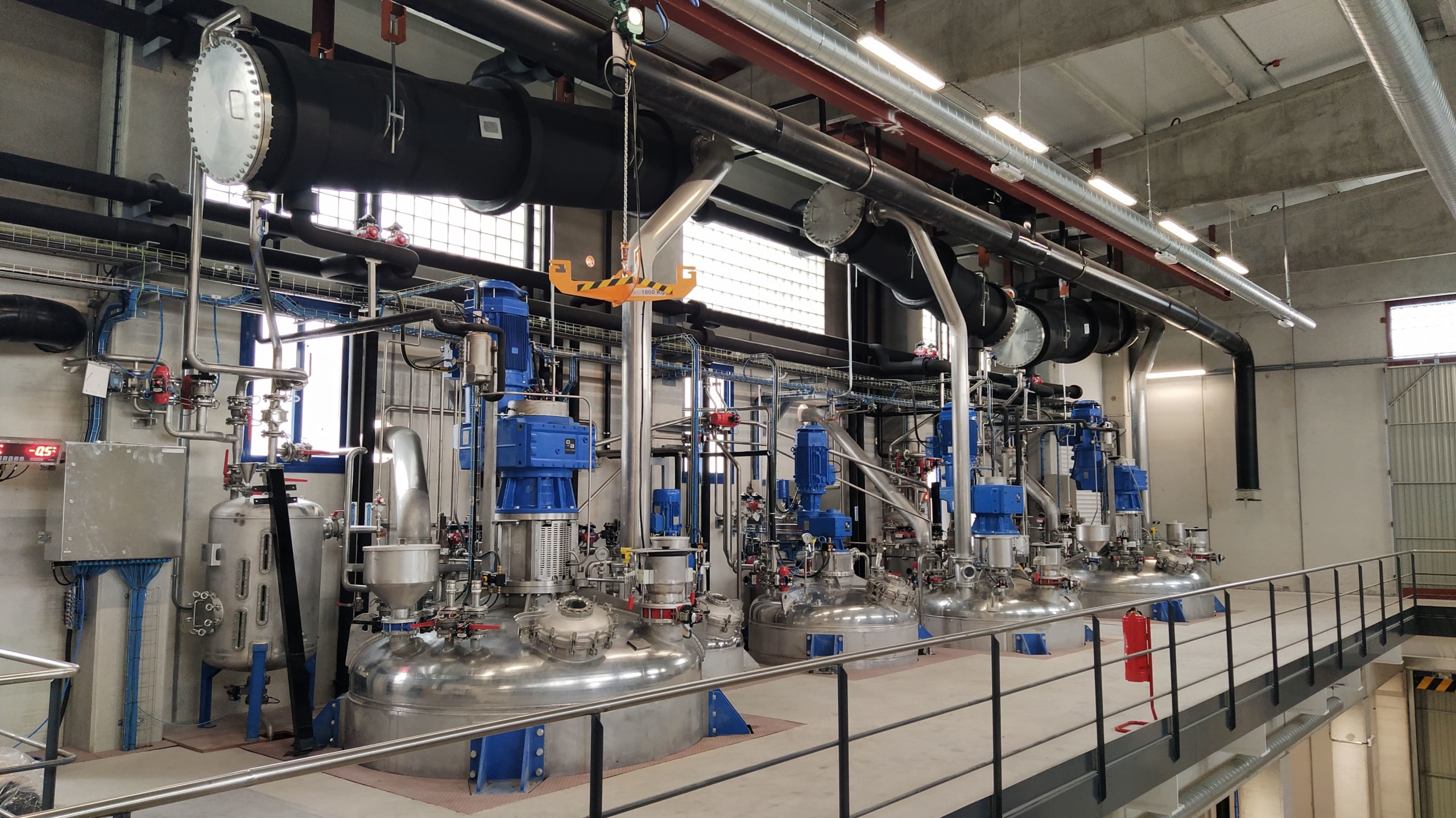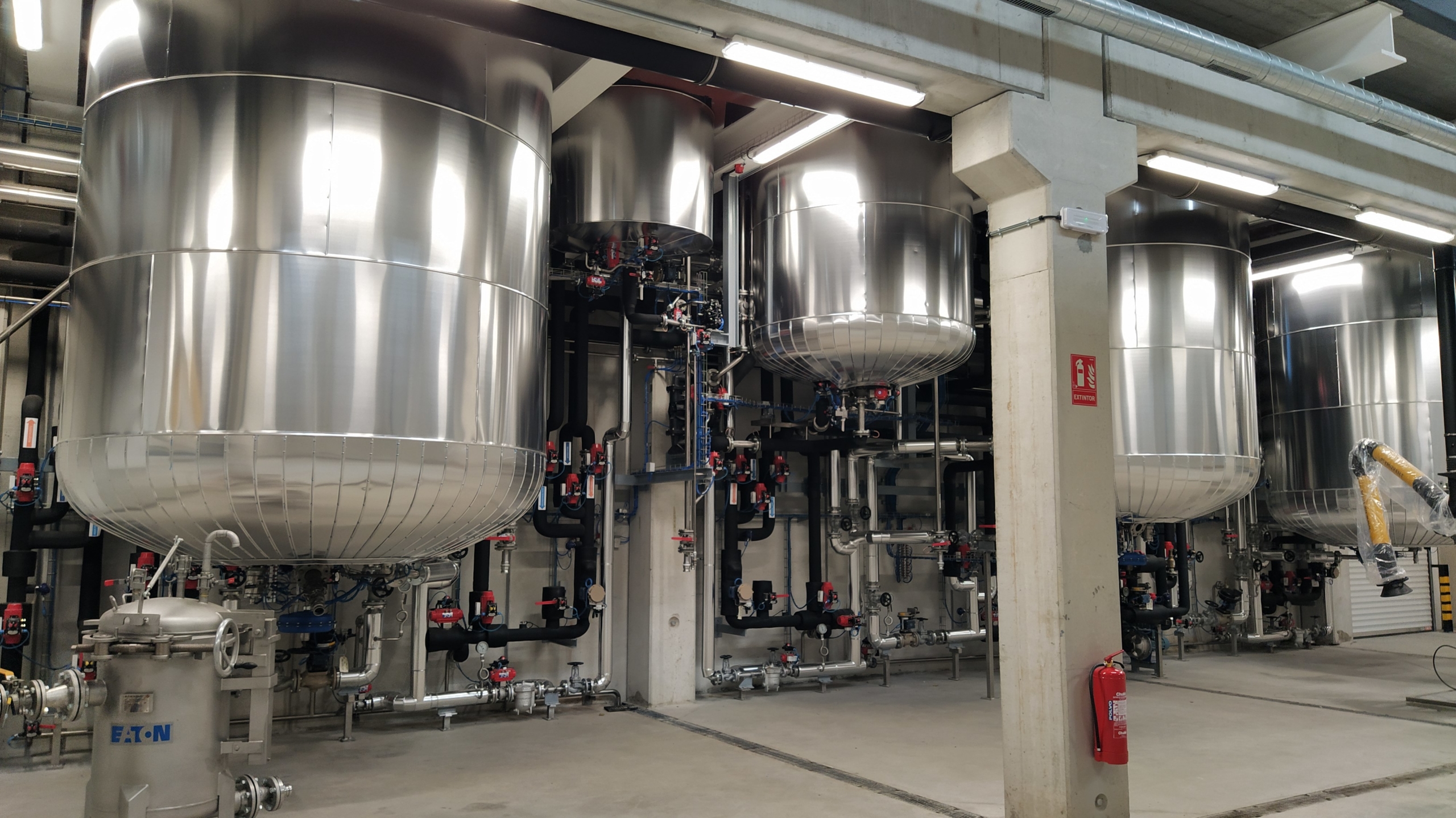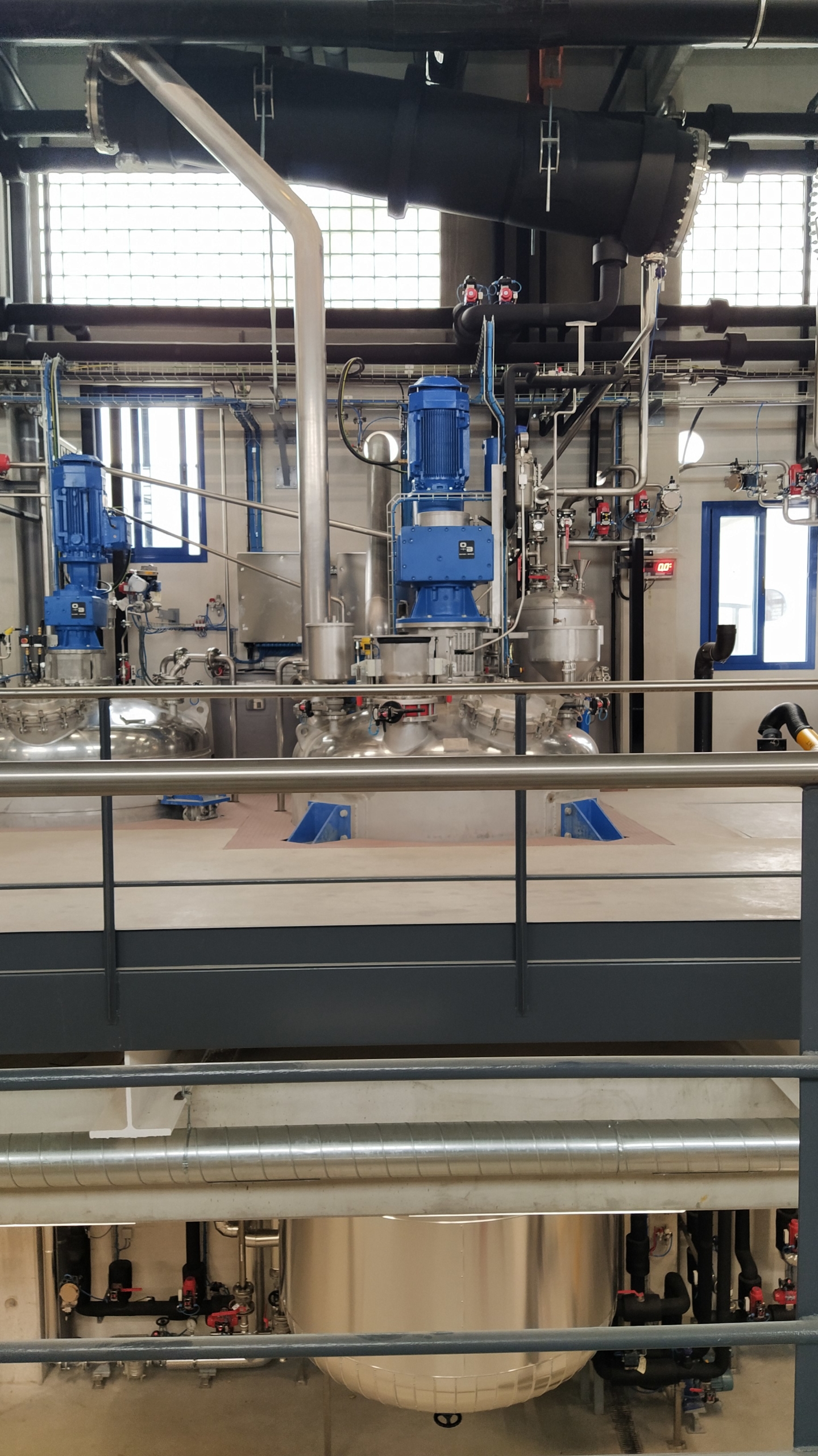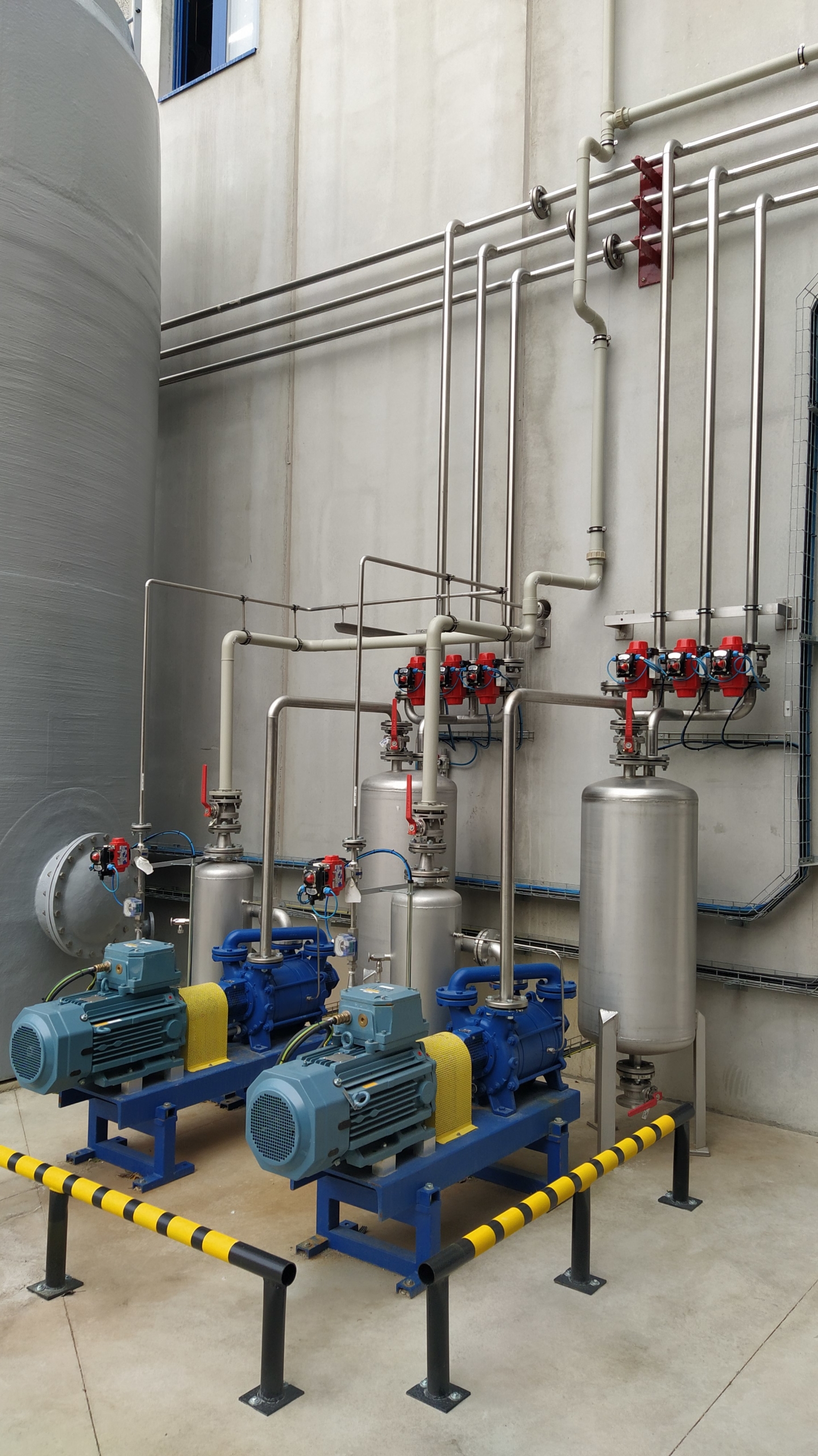
The paint and coatings industry is undergoing a profound technological transformation. To remain competitive, modern manufacturing plants must go beyond traditional methods and adopt fully interconnected, data-driven ecosystems.

Recently, industry leaders gathered at the highly anticipated webinar “Digitalization in the Paint and Coatings Industry”, organized by Oliver + Batlle. We had a top-tier panel of experts to guide the presentation: Carles Bigas (Process Engineering Manager), Josep Maria Martínez (Automation Software Department Manager), Arturo Laguna (Automation Project Manager at Tectrol), and Carlos Pacha (Sales and Managing Director). The session offered a roadmap for production modernization, featuring expert presentations on industrial automation, real-time line management, and Artificial Intelligence integration.

If you couldn’t attend live or want to review the key concepts discussed, below are the main technical takeaways and technological trends covered during the event:

  • Batch Control Systems: The power of TTBATCH

The event kicked off by delving into the smart management of industrial recipes using the TTBATCH software. It was explained in detail how this system allows for the complete optimization and automation of the creation, execution, and tracking of formulas in paint manufacturing.

It was highlighted to the attendees that the TTBATCH interface greatly facilitates three crucial aspects: direct connection with ERP systems for precise inventory control, multi-platform real-time data visualization (PC, tablet, or smartphone), and the detailed recording of each batch produced (Audit Trail) to ensure maximum quality.

As presented, by integrating this type of software with our machines equipped with PLC and HMI touch screens, manufacturers achieve a drastic increase in efficiency and a notable reduction in operating costs.

  • Line Management Systems (LMS): Total line visibility

Moving forward in the session, the talk focused on Line Management Systems (LMS). At this point, it was illustrated how this technology acts as a digital bridge between the physical equipment on the plant floor and commercial decision-making.

Emphasis was placed on the importance of real-time data acquisition through connection to PLCs and industrial sensors. Thanks to this, the LMS system allows instant visualization of whether the line is operating correctly (running), on standby (idle), or has suffered a stoppage (fault). Furthermore, it was detailed how this tool calculates Overall Equipment Effectiveness (OEE) live, allowing for a much more agile response to any deviation and minimizing unplanned downtime.

  • New trend for Operational Excellence

In the final stretch of the webinar, the immediate future of digitalization in factories was explored, presenting six cutting-edge data-driven solutions:

  • Production validation portal: Background analysis of recipes, process data, and alarms to issue a clear verdict (Validated/Rejected) at the end of the batch.
  • Manual scanning validation (Barcode): As explained in the session, scanning raw materials locks or unlocks valves via the PLC, ensuring total traceability and eliminating paper-based risks.
  • Artificial Intelligence-based Soft-Sensors: Use of predictive virtual sensors to estimate critical values in real-time, such as pH or viscosity.
  • Unified orchestration portal: Seamless connection of workflows between Production, Laboratory, and Packaging to eliminate departmental information silos.
  • Energy cost per batch analytics: Integration of electrical monitoring with TTBATCH so that the manufacturer knows the real profitability and exact energy cost of each batch.
  • Paperless verification templates: Digital forms executable on tablets that generate immediate automatic alerts if any parameter falls out of specification.

Looking to the future

The webinar made it clear that digitalization in the paints and coatings sector is no longer an abstract concept, but a practical and implementable reality. By leveraging batch control systems, line management systems, and AI-based analytics, manufacturers can drastically reduce unproductive times, eliminate manual variability, and ensure a highly profitable and sustainable future.

Did you miss it? Watch the Webinar Replay!

The transformation towards Industry 4.0 is no longer an option; it is the standard to remain competitive. If you want to delve deeper into how these technologies can be applied to your factory, watch on-screen demonstrations of the software, or hear firsthand explanations from our management and technical team, we invite you to watch the full recording of the session.

And if you are thinking of modernizing your facilities or implementing a more efficient and interconnected process engineering, contact our technical team today. At Oliver + Batlle, we are ready to accompany you on the path to the smart factory.

Puma Group and its coatings division

Grupo Puma  is a leading business group in the construction materials sector and the largest manufacturer of mortars in Spain. With over 40 years of experience, it develops a wide range of solutions for construction, including adhesives, insulation systems, flooring, asphalt products and renovation solutions.

The group also has a division specialising in coatings, both water-based and solvent-based, for the manufacture of waterproofing and decorative paints for façades and fillers that can be applied to different surfaces. It currently has 37 production centres and a distribution network spanning four continents.

Product to be processed and project objective

The client manufactures coatings and coverings mainly for the construction sector. Within the framework of this project, the installation of additives is intended for the production of water-based coatings.

The incorporation of additives during the manufacture of paints and coatings is common practice in the industry, as they allow various properties of the final product to be adjusted and improved. Their functions include improving the dispersion of pigments and fillers (dispersants), controlling foam generated during the process (defoamers), stabilising the system by adjusting the pH, and providing specific properties such as biological resistance, gloss control, or modification of drying times.

These additives are normally used in small quantities and are incorporated at different stages of the manufacturing process, which requires precise and repeatable dosing to ensure the quality and homogeneity of the final product. They are usually supplied in industrial containers such as IBCs or 200-litre drums, so in many plants weighing and addition are done manually.

In this context, the aim of the project was to design and implement an automated system capable of managing the weighing and precise dosing of different additives into eight independent dispersion tanks. The installation had to guarantee speed, accuracy and repeatability in the additions, integrating into the existing production process and allowing the direct use of IBCs as storage tanks for the additives. The aim was to avoid frequent transfer or replacement of containers, optimise internal raw material logistics and improve the overall efficiency of the manufacturing process.

Oliver + Batlle solution

To solve the challenge, Oliver + Batlle designed an automated additive dosing system comprising the following main elements:

  • A 300-litre additive weighing hopper, made of stainless steel and equipped with load cells. It incorporates automatic valves for dosing 11 different additives: 9 of them dosed by gravity and 2 by pumping, due to their higher viscosity. The system also has manual valves with micro-switches for loading the stock IBCs of each additive.
  • Two pneumatic pumping units, designed for dosing higher viscosity additives.
  • A pneumatic transfer pump, responsible for transferring the product from the weighing hopper to any of the eight possible destinations.
  • A stainless steel distribution manifold equipped with seven automatic three-way valves, allowing the destination of the additive to be selected.
  • Eight automatic line shut-off valves, installed at the inlet of each of the dispersion tanks.
  • An electrical control and manoeuvring cabinet, equipped with a PLC and HMI touch screen, from which the operator can select the additive to be dosed, define the weight set point, manage stock loading and monitor the operation of the installation.
  • Two portable pump units on trolleys, designed for loading IBCs of additive stock.

Oliver + Batlle carried out all the engineering work for implementation at the plant, including the distribution of the additive IBCs, the weighing hopper, the pumping equipment and the layout of the pipes from the hopper to the collector and from there to the dispersion tanks.

The mechanical, electrical and pneumatic assembly was carried out by the customer themselves, under the supervision of an O+B technician.

Subsequently, the installation was commissioned with the participation of a mechanical technician and an Oliver + Batlle programmer.

During operation, additives compatible with each other are dosed and weighed in the hopper, from where they are automatically transferred to the selected dispersion tank. The system also incorporates a water cleaning cycle for the hopper and  flushing of the pipeline, ensuring that all the additives reach its destination.

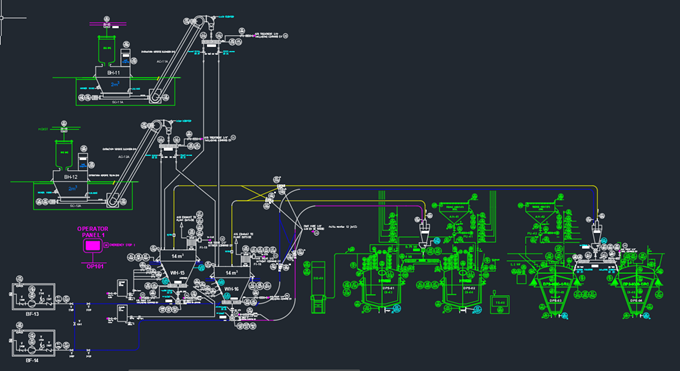
The additive dosing control system was integrated into the factory’s automated system for executing complete recipes using the customer’s SCADA, establishing communication between the PLC of the system supplied by Oliver + Batlle and the plant’s main PLC.

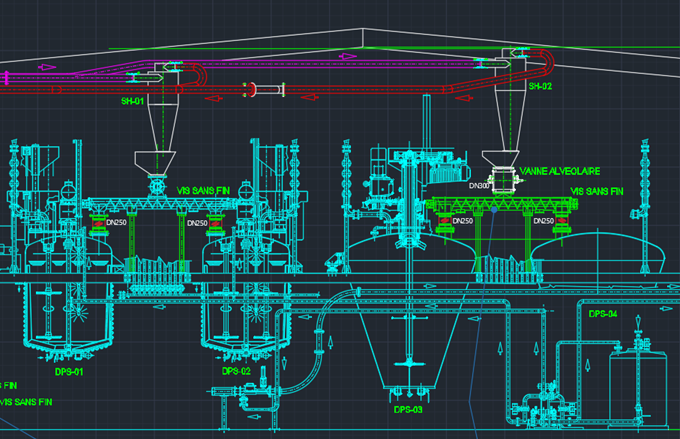
3D views of the additive storage and distribution system: stock IBCs, 3-way valve manifold and piping to dispersion tanks

Results and advantages of the implemented solution

Thanks to the implementation of this automated additive dosing system, the customer has significantly optimised manufacturing times.

The process has gained in precision, cleanliness and repeatability, eliminating the variability associated with manual dosing.

In addition, the system provides complete traceability of the process, recording the dosages carried out for each batch, including the additive code, target value, actual dosage value, destination, date and time of the operation.

Automation has also reduced the operational workload, minimising manual interventions and facilitating the work of the plant operator.


The main advantages of the implemented solution are:

  • Automation of the additive dosing process.
  • Greater precision and repeatability in each manufacturing batch.
  • Optimisation of process times.
  • Improved cleanliness and order in the plant.
  • Complete traceability of dosages performed.
  • Reduction in operator workload.
  • Integration with the existing control system through communication between PLCs.
  • Direct use of IBCs as additive stock tanks, optimising internal logistics.

Do you need to automate dosing in your production plant?

At Oliver + Batlle, we specialise in process engineering design and customised automation for the chemical and coatings industry. From upgrading existing lines to designing turnkey production plants.

Contact our technical team today  and find out how we can help you optimise your cycle times, improve traceability and make your manufacturing process more profitable.

Oliver + Batlle presents the new frontier in paint dispensing and packaging: the Additive Manufacturing 3D Nozzles service, custom-designed for each customer and need.

This approach transforms the concept of a simple product into a completely personalised service optimised for your production line.

Key advantages of the service

Our service transforms the concept of a simple component into a comprehensive customised solution, designed to maximise the performance of your production line based on the following pillars:

  1. Manufacturing efficiency and profitability
  • Increased speed: Achieve up to a 20% increase in manufacturing speed compared to conventional metal dispensers.
  • Time optimisation: Reducing the dispensing cycle is the key factor in increasing your total production capacity.
  • Cost reduction: Operational efficiency and the possibility of accessing annual supply contracts allow for a significant reduction in maintenance and replacement costs.
  1. Dosing quality and filling accuracy
  • No more drips and foam: The customised design ensures perfect flow even with difficult-to-fill products, eliminating common problems with standard nozzles.
  • A nozzle for every container: We implement the concept of an optimal diameter for each type of container, ensuring a millimetre-perfect fit that dramatically improves packaging quality.
  1. Customisation and material superiority

Thanks to additive manufacturing (3D printing), we design nozzles layer by layer with benefits that are impossible to achieve through traditional machining:

  • Minimum weight: Geometric optimisation allows for much lighter parts, facilitating handling and reducing mechanical stress on equipment.
  • Maximum impact resistance: We use advanced technical polymers that offer superior durability against shocks and intensive use in the plant.
  • Ad-hoc flexibility: We adapt each design to the exact specifications of your product and container after a preliminary study of your lines.

The Oliver + Batlle service

A subscription model tailored to your needs

Stop worrying about optimising your dosing equipment. Our 3D nozzle service offers you a convenient, efficient printing solution with no long-term commitment, tailored to your needs.

How does it work?

  1. Ad-hoc study and design: Unlike purchasing a product, we begin with a preliminary study of your products and packaging lines for CAD development and functional prototyping of your custom nozzle.
  2. Scheduled production and delivery: Once the design has been validated, scheduled deliveries of the custom nozzles are established, ensuring that you receive the components just when you need them.
  3. Total flexibility: You can change, interrupt or cancel the service at any time. If your production varies, we offer an annual supply contract (min. 6 units) with adjusted prices and the possibility of an express service with guaranteed fast delivery (24 hours in Europe and 72 hours in the rest of the world).

Prices and contact

The prices of our service are determined based on your customisation needs and the volume of your supply plan.

  • Request a Personalised Quote: To discover the potential savings and prices of additive nozzles or the design service for a new nozzle, contact our sales team.

Optimizing production in the construction sector requires technology capable of handling complex materials. In this article, we analyse how Oliver + Batlle‘s advanced engineering solved the packaging challenges of Saint-Gobain Weber UK, the undisputed leader in industrial mortars and cutting-edge solutions in the United Kingdom.

Brief description of the company

Saint-Gobain Weber Ltd is a multinational subsidiary of the prestigious French group Saint-Gobain. The company stands out for its specialization in solutions for the construction and renovation of buildings, providing everything from industrial mortars and ceramic adhesives to advanced thermal insulation systems for facades and floors. Its commitment to quality has positioned it as a benchmark in new construction and restoration projects.

The challenge: Processing high-viscosity and abrasive products

The project focused on a highly complex technical challenge: the processing and packaging of wet plaster for plasterboard (stucco products).

This technical material has physical properties that make it difficult to handle:

  • Specific density:25–1.35 kg/dm³.
  • High viscosity: Between 500 and 3000 poises.
  • Abrasive nature: Requires superior mechanical robustness to ensure constant flow and accurate dosing without damaging the equipment.

Objective of the “Turnkey” project

The main challenge was to implement a turnkey production line capable of automating a previously manual process, while complying with Saint-Gobain Weber’s demanding standards:

  • High Performance: Achieve a stable rate of 10 containers of 20 kg (15L) per minute.
  • Maximum Gravimetric Accuracy: Maintain a variability of less than ±100g per container to drastically reduce raw material waste.
  • Process Integration: Intelligent connection via a handshake system with two existing 3,000L dispersers in the plant.
  • Innovation in dosing: Design of ad-hoc nozzles to optimize product distribution, avoiding stains in the closure area and ensuring a clean finish.

The Oliver + Batlle Solution: High-strength engineering

At Oliver+Batlle, we implement a comprehensive solution that complies with IP-54 protection standards and is manufactured with AISI-316 stainless steel in all contact areas to combat abrasion.

A) Feeding and Process Integration

  • Progressive Cavity Pumping Units: Two 15 kW helical pumping units with NBR stators and chrome-plated AlSi-316L stainless steel rotors, specifically designed for handling abrasive products.
  • Optimized Distribution: Complete installation of pipes and valves for efficient flow from the production area to the packaging area.

B) Automated Packaging Line

  • Pailmanager V-Flex Denester: Automatic system with capacity for stacks up to 400 mm in height. It enables fully automated format changeover managed from the HMI, with memory for up to 100 recipes, and incorporates photoelectric safety barriers to ensure operational protection.
  • OB-130-T Gravimetric filling unit: Dual-head system based on the “2-in-1” concept, optimizing the filling cycle without compromising accuracy.
  • Mettler Toledo Technology: Use of IND570 weighing terminals, ensuring metrological-grade accuracy and reliability in each dosing cycle.
  • Peripheral Systems and Traceability: Includes DT-350-S lids dispenser with lid presence detector, lid closing station CR-130 for flat press-on lids with manual adjustment, and a checkweigher with automatic rejection for out-of-tolerance containers.
  • Comprehensive Service: Full project scope, from P&ID and layout design to technical training of plant personnel.

Results

Thanks to the engineering solution implemented by Oliver + Batlle Saint-Gobain Weber UK has completely transformed the operational capacity of its plant in Flitwick.

The automated line continuously manages destacking, filling, and closing operations, allowing a sustained production rate of 10 units per minute to be achieved. The use of the OB-130-T Gravimetric Filling Machine allows for interleaved filling, optimizing cycle time without compromising the precision required for high-viscosity products.

This technical approach maximizes the profitability and efficiency of the process:

  • Cost optimization: The high precision of ±100g, together with the automatic rejection system, eliminates costly overfilling and raw material waste, accelerating return on investment.
  • Operational agility: Downtime between batches is drastically reduced thanks to the automated format changeover managed via the HMI of the Pailmanager V-Flex.
  • Reliability and durability: The use of AISI-316 stainless steel and the robustness of the helical pump units ensure a long service life for components despite the abrasive nature of technical putty.

As a result, the overall performance of the installation is improved, ensuring the high efficiency and quality standards required by the Saint-Gobain group for its construction solutions.

Conclusion

The success achieved in this project demonstrates that high viscosity and the abrasive nature of technical materials  are not obstacles when the right technology is in place. The satisfaction of Saint-Gobain Weber UK, reflected in the words of Toni Wallis—who highlights that Oliver + Batlle‘s solution has enabled them to meet their highest efficiency standards—is the best endorsement of our engineering expertise.

If your plant is also facing challenges in the packaging of technical products, we invite you to discover how we can help transform your operations.


You can see the complete process in the following video available on our YouTube channel.


What advantages do CFD and FEM simulations offer in the design of industrial mizers?

In modern industrial design, technical simulation has become an indispensable tool because it allows the actual behaviour of an mixing equipment to be predicted long before the manufacturing stage begins. Traditionally, the industry has relied on generic estimates, but thanks to Computational Fluid Dynamics (CFD), it is possible to accurately visualise the flow of the product inside the tank, while Finite Element Analysis (FEM) guarantees the structural integrity of the equipment.


This methodology provides unmatched accuracy by eliminating the margin of error that often results from the use of generic power curves found in technical literature. In addition, it gives engineers great versatility, allowing them to design equipment that is capable of processing products with different densities and viscosities, adapting perfectly to both Newtonian and non-Newtonian fluids.

What are the main anchor mixer designs and which one should you choose?

Selecting the right geometry is critical to the success of the process. To facilitate this analysis, three key geometric configurations that meet different industrial needs have been compared:

  1. Flat plate anchor with rear reinforcements: This is the robust reference design, which has been specifically designed to provide maximum structural rigidity for the most demanding applications.
  2. Bent flat plate anchor: This configuration represents an optimised evolution in mixing engineering, as it significantly reduces weight while maintaining hydraulic efficiency.
  3. Tube anchor without reinforcements: This is an alternative hydrodynamic design aimed at applications with specific requirements for higher agitation speeds.


How can fluid dynamic performance be improved and dead zones in the tank be avoided?

The detailed design of the anchor geometry is a critical factor in controlling product movement and achieving total process control.

In terms of tank wall efficiency, all our designs ensure continuous renewal of the fluid in contact with the surfaces through the use of scrapers, which is essential to prevent the formation of thermal dead zones that could compromise product quality.

With respect to rotational flow, CFD simulations clearly show that the maximum fluid velocity is concentrated at the tank periphery. If the production process requires a strong axial flow in the central region, additional mixing elements must be incorporated in that area.


Furthermore, hydrodynamic performance also allows optimisation of operating speed; for example, simulations show that while flat-plate designs operate effectively at just 12 rpm, the tube anchor design without reinforcements requires speeds of up to 25 rpm to achieve equivalent mixing performance.

How to calculate motor power for non-Newtonian and high-viscosity fluids?

One of the key advantages of advanced simulations is the ability to process complex products with a high level of reliability. In industry, a common mistake is to treat a complex fluid as Newtonian, which can often lead to unnecessary oversizing of the mixer motor.

To address this issue, CFD simulation analyses the actual shear rate of the product in motion, allowing us to calculate the so-called ‘effective viscosity’. Accurate determination of this value allows the required installed power to be safely reduced compared to the oversizing typically resulting from traditional analytical calculations.

All of this applies across a wide operating range , with flow behaviour analysed from very low viscosities up to extreme demands of 2000 Poise. As a result, the final equipment configuration is accurately tailored to the specific density and consistency of your product.


How to ensure structural strength and optimise the weight of the mixer?

An industrial mixer must not only provide effective mixing performance but also ensure durability and safety throughout its service life. FEM (Finite Element Analysis) simulation ensures mechanical integrity while enabling cost optimisation.

For example, in terms of Factor of Safety, the flat-plate anchor design with rear reinforcements provides a very conservative margin of FoS = 2.2, making it suitable for withstanding extreme loads without risk of failure.


On the other hand, if we are looking for material efficiency, stress analysis allows us to accurately identify critical load points so that reinforcements can be applied only where strictly necessary, thus preventing structural failure due to plastic deformation under high viscosity conditions.


The result of this analysis is the development of a bent flat-plate anchor design, which achieves an impressive 41% reduction in the equipment weight , while maintaining similar hydrodynamic performance and significantly reducing material costs.

Why choose Oliver + Batlle’s customised mixers for your industrial process?

Thanks to the comprehensive implementation of advanced simulation, choosing Oliver + Batlle technology offers direct competitive advantages for your production plant.

Energy savings: Precisely dimensioned motors optimised for non-Newtonian fluids, avoiding unnecessary energy consumption.

Efficient design: Optimisation of geometry and construction materials to improve overall equipment efficiency and significant reduction in your equipment’s carbon footprint.

Custom design: Each mixer is configured according to the specific viscosity and density range of your process, avoiding generic solutions that may compromise efficiency and productivity.

Do you need advice on how to optimise your agitation process?

Each industrial process has specific requirements in terms of viscosity, density, temperature and consistency. Our technical team can evaluate your application and recommend the most suitable geometry, power and configuration, ensuring optimised energy efficiency and structural reliability.

Contact us for a tailored technical study and to optimise your plant’s performance with confidence.

You can also find all the information about our range of Oliver + Batlle industrial mixers, where you will find tailor-made solutions for every production need.