Insights on basket milling
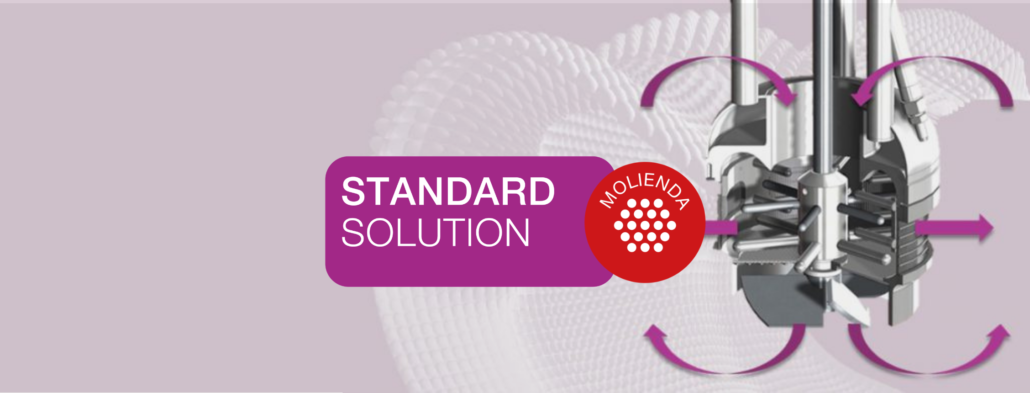
Immersion Milling: A technical guide to optimizing coating efficiency
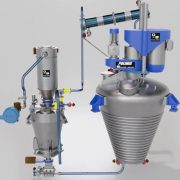
Immersion grinding is a pigment dispersion and milling process that uses a circular basket mill submerged directly into the product. Unlike horizontal grinding systems, this technology eliminates the need for pumps and hoses, helping to reduce product losses and speed up cleaning operations. It also allows batches of up to 2,000 litres to be processed, with product viscosities of up to 10,000 Centipoises.
But what differentiates the various immersion and circular basket mills available on the market? What features should be considered when selecting the most suitable equipment for each process?
Basket mill technology has become widely established in the coatings industry, and leading equipment manufacturers have developed different ranges and configurations to meet the requirements of each application. Differences in geometry, size, number of agitation shafts, basket configuration and cooling capacity can make selecting the right equipment a complex decision.
What are the benefits of immersion milling?
Compared with other grinding technologies, basket mills offer a number of advantages, mainly related to process simplification and reduced auxiliary equipment requirements:
- Reduced product losses: the absence of pumps and hoses minimizes the amount of product remaining in external circuits.
- Easy operation: the process does not require specific pressure or flow-rate control for mill operation.
- Lower maintenance costs: the absence of mechanical seals reduces the number of components requiring maintenance.
- Reduced plant footprint: the vessel is integrated into the equipment during the grinding operation.
One of the main limitations of this technology is related to batch size. In the case of Oliver + Batlle, the Mill-ennium RS range can process batches of up to 2,000 litres. When working with a highly concentrated grinding base, it can subsequently be diluted to increase the final volume of finished product.
Mill-ennium RS: Advantages in pigment processing
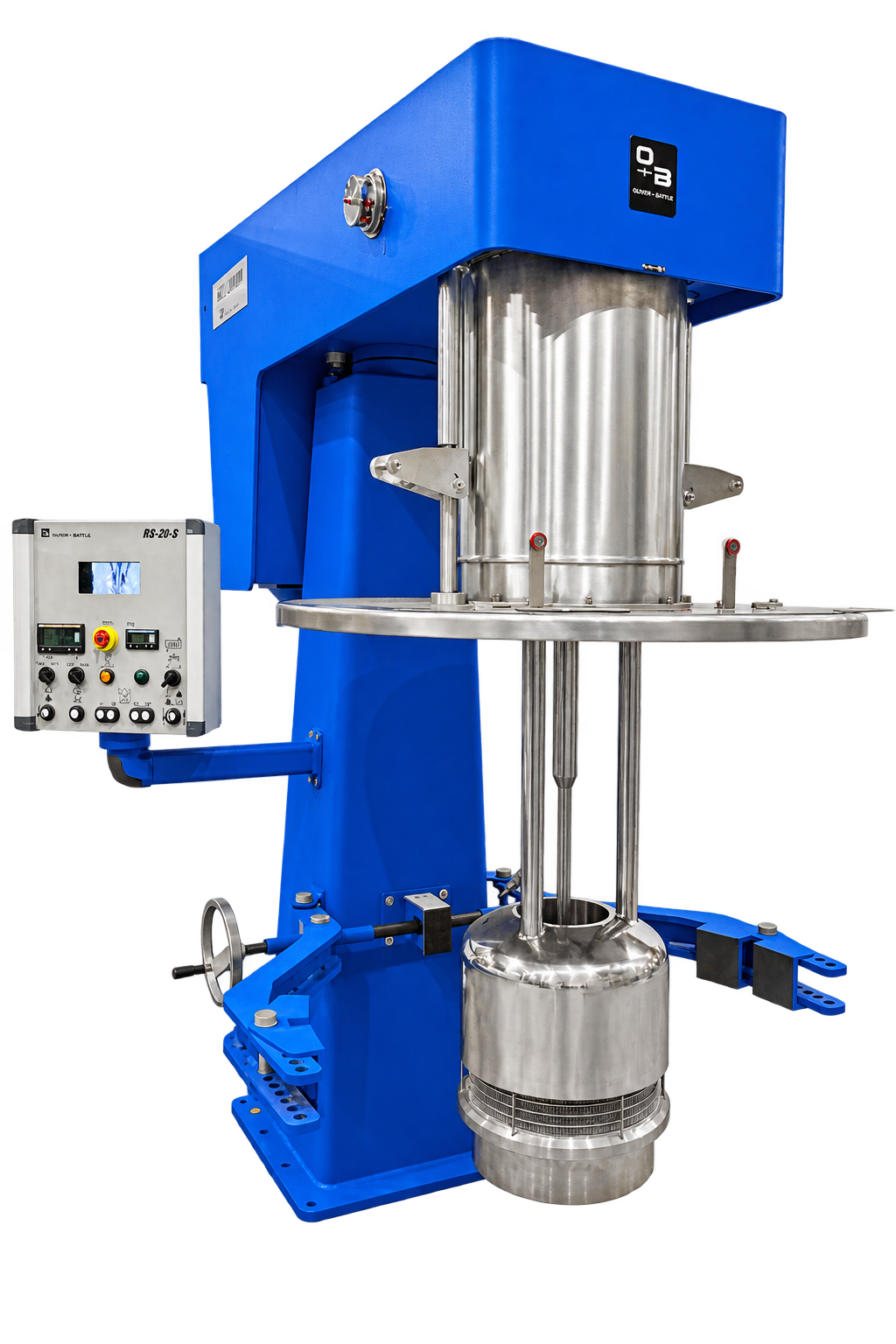
Over the years, Oliver + Batlle has conducted more than 400 immersion grinding trials with the Mill-ennium RS basket mill at its pilot plant in Barcelona.
These trials have been carried out using different formulations and pigments for applications including inks, paints, pigment dispersions and other products. The results have been analyzed and compared with those obtained using other basket mills and different grinding technologies.
The main advantages identified include:
- Faster cleaning and product changeovers, thanks to the design and dimensions of the basket, its rounded edges and the ease of replacing the grinding beads.
- Flexibility in Yttrium bead size selection, with beads as small as 0.3 mm available for applications requiring extreme fineness. The system also allows the screens to be changed according to process requirements.
- Wide viscosity range, with the ability to process products with viscosities of up to 10,000 Centipoises using different configurations of interchangeable shafts and scrapers.

- Easy maintenance, as certain maintenance operations can be carried out directly by the operator without requiring intervention from maintenance personnel.
- High process efficiency, thanks to reduced downtime associated with cleaning and maintenance operations, combined with high equipment performance.
- Optimized power-to-basket-to-vessel ratio, enabling high production output with lower grinding bead consumption and reduced product losses.
- Reduced production times: approximately 50% compared with traditional mills and up to 30% compared with other immersion mills.

Table 1. Comparative results of processing times in batches equal to 900 L, under the product conditions.
- Lower energy consumption per batch produced compared with horizontal and recirculation mills.

Table 2. Comparative results of power consumption in batches equal to 900 L, under the same product conditions.
The comparative results for processing times and energy consumption were obtained using 900-litre batches processed under the same product conditions.
What control software options are available for immersion milling?

Oliver + Batlle offers two levels of control software for its immersion mills, designed to accommodate different operating and automation requirements.
- Type S: features an essential control panel with push buttons for manual equipment operation.
- Type CP: adds manufacturing recipe management and allows batch histories, alarms and maintenance times to be stored. This level of automation facilitates process standardization and enables optimized, repeatable results, reducing reliance on the operator’s experience.
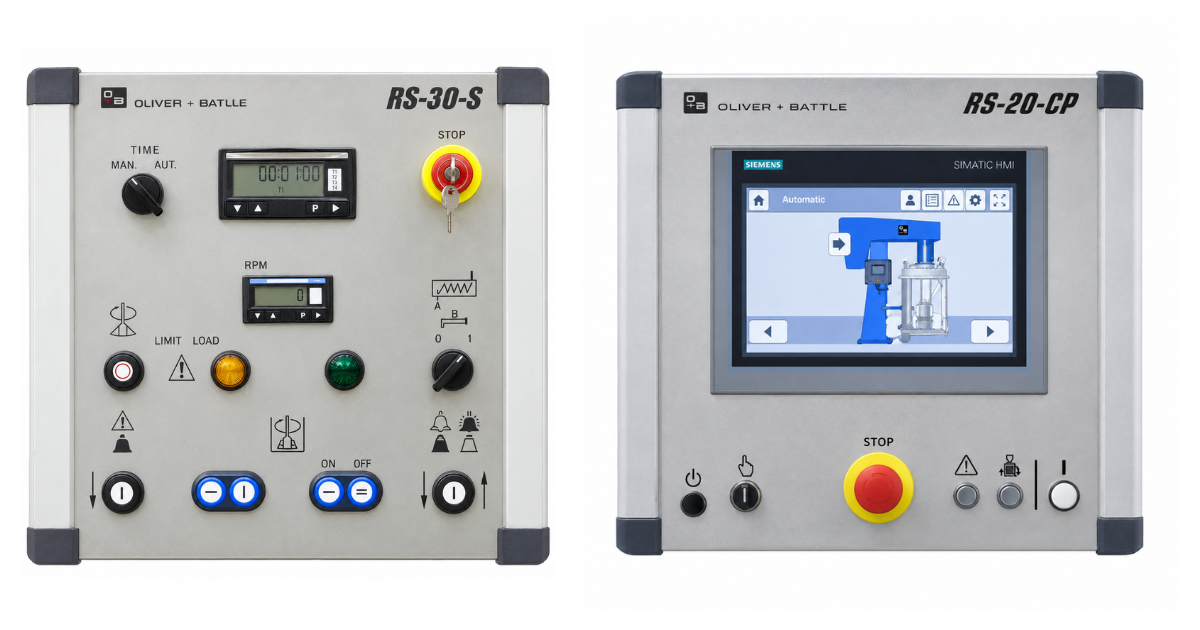
Version S and Version CP
Oliver + Batlle offers two levels of control software for its immersion mills, designed to accommodate different operating and automation requirements.
- Type S: features an essential control panel with push buttons for manual equipment operation.
- Type CP: Includes digital signals, O+B control software and touchscreen. It allows operators to manage and run production recipes, as well as store batch histories, alarms and maintenance records. This level of automation facilitates process standardization and helps achieve optimized and repeatable results, reducing dependence on operator experience.
What additional features does the Mill-ennium RS basket mill offer?
In addition to the standard features of the Mill-ennium RS circular basket mill, Oliver + Batlle offers different configurations that allow the equipment to be adapted to the specific characteristics of the product and manufacturing process.
These include:
- Vacuum lid: recommended for the manufacture of medium-viscosity products and used with reinforced vessels.
- Side-wall scraper: particularly suitable for thixotropic products.
- Helical orbital blade: recommended for the manufacture of high-viscosity products.
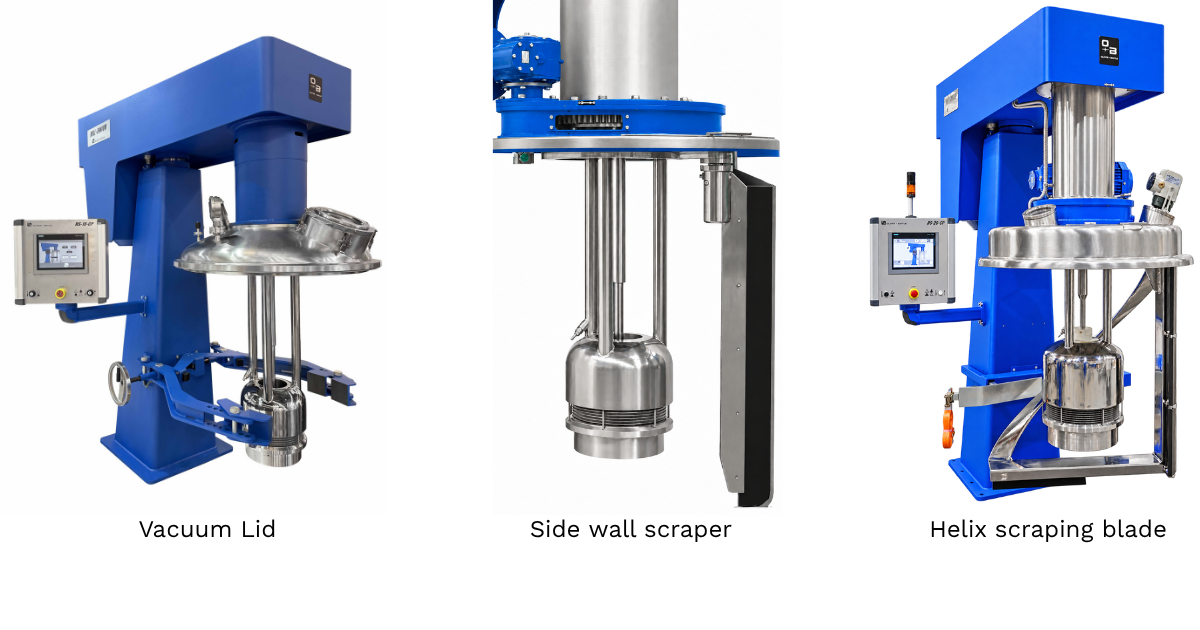
These configurations allow the equipment to be adapted to different formulations and process requirements.
FAQS
What are the advantages of a basket mill compared with a horizontal mill?
The main advantage is the elimination of pumps and mechanical seals. This reduces maintenance requirements, facilitates cleaning operations and minimizes product losses by carrying out the process in a single integrated vessel.
What is the maximum batch size for immersion grinding?
In equipment such as the Mill-ennium RS, the standard batch size reaches 2,000 litres. This allows concentrated grinding bases to be processed and subsequently diluted to increase the final volume of finished product.
What viscosity can the Mill-ennium RS handle?
Thanks to its multiple shafts and interchangeable scrapers, the Mill-ennium RS can process high-viscosity products of up to 10,000 Poises, promoting adequate product circulation through the grinding basket.
Ready to incorporate flexibility and automation into your manufacturing process?
If you’re looking to optimize your production, we invite you to request more information through our contact section . Our team will help you thoroughly evaluate which Mill-ennium RS immersion mill model is best suited to your specific requirements.
Stay updated on our latest news on LinkedIn.