Wet grinding has become an indispensable technological process in the manufacture of paints, inks, and coatings. This method, which relies on the use of ceramic microspheres in a liquid medium, not only ensures perfect homogenization and extremely fine micrometric particle sizes while preserving the molecular structure of the formulations, but also offers unmatched operational advantages over traditional technologies. By optimizing thermal control, energy consumption is significantly reduced, and a clean, dust-free working environment is ensured. Furthermore, implementing wet grinding is key to maximizing optical quality, profitability, and safety in any production facility.

What is wet grinding, and why is it essential?

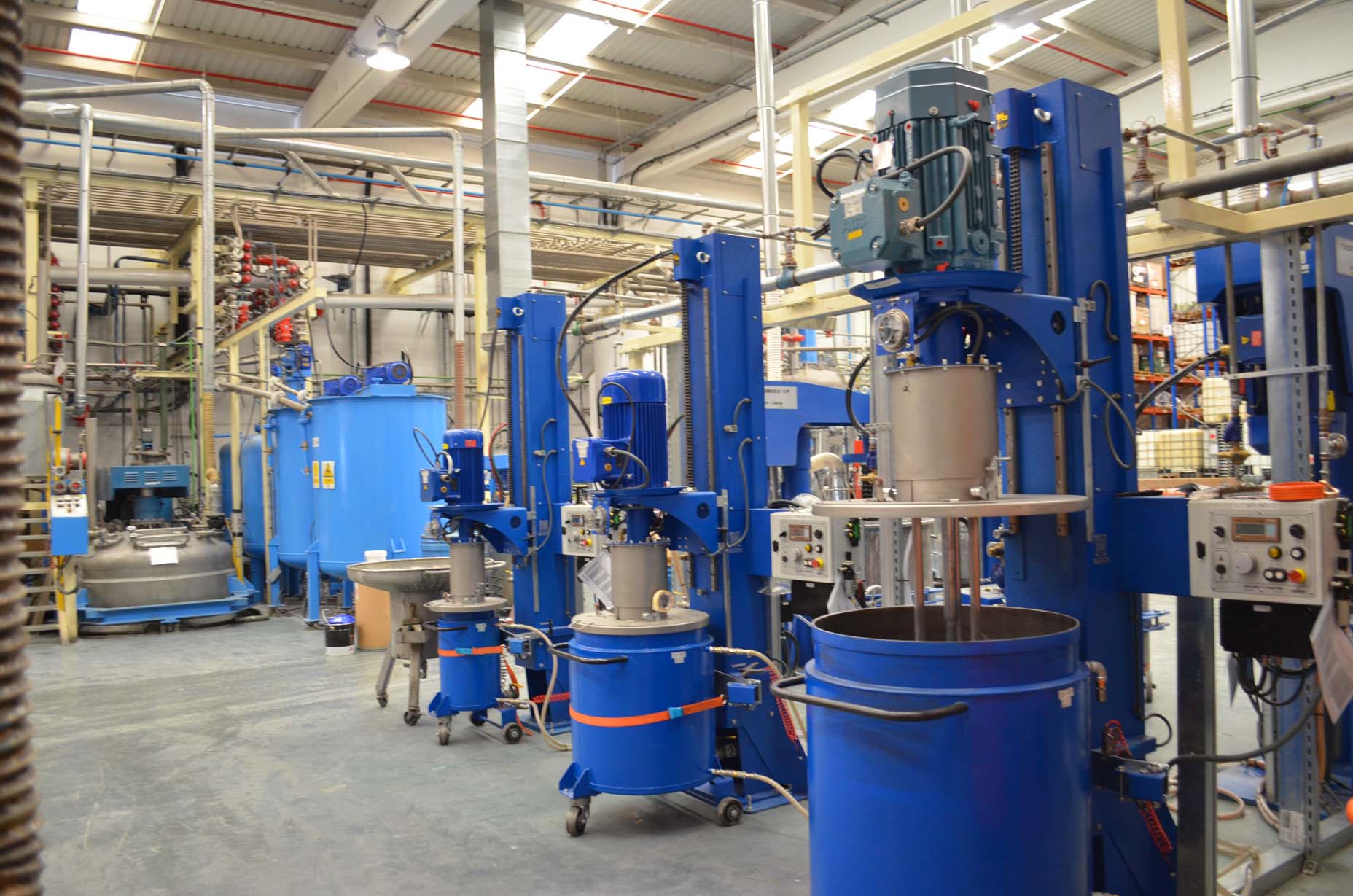
In the manufacture of paints, inks, enamels, and coatings, achieving the proper fineness and perfect homogenization is a key factor in ensuring the optical and mechanical quality of the final product. Wet grinding has established itself as an indispensable industrial process, in which the movement of ceramic microspheres is used to separate and reduce solid particles previously incorporated into a liquid medium.

Compared to other traditional technologies, this method offers unmatched operational and performance benefits for any production facility.
What are the 8 advantages of wet grinding?

Below, we examine the main reasons why this process makes a difference in achieving maximum quality and profitability:

1. Effective initial separation: The effect of pre-mixing the solid into the liquid provides an initial separation of particles.

2. Gentle product handling: Wet grinding allows for gentle processing of the product, preserving its molecular structure.

3. Safe and clean working environment: The process in a liquid medium prevents dust emissions that may cause material losses, while also improving workplace safety, cleanliness, and operator comfort.

4. Energy efficiency: Wet grinding processes use less energy to achieve the smallest particle size.

5. Superior thermal control: The use of a liquid medium during the process promotes heat exchange and allows for better control of process temperatures.

6. Formulation optimization: The variation in viscosity of the liquid medium allows for more efficient formulations.

7. Guaranteed homogeneity: Final particle size distributions are much more uniform in wet grinding processes.

8. Extreme fineness: Smaller micrometric and submicrometric particle sizes are achieved.
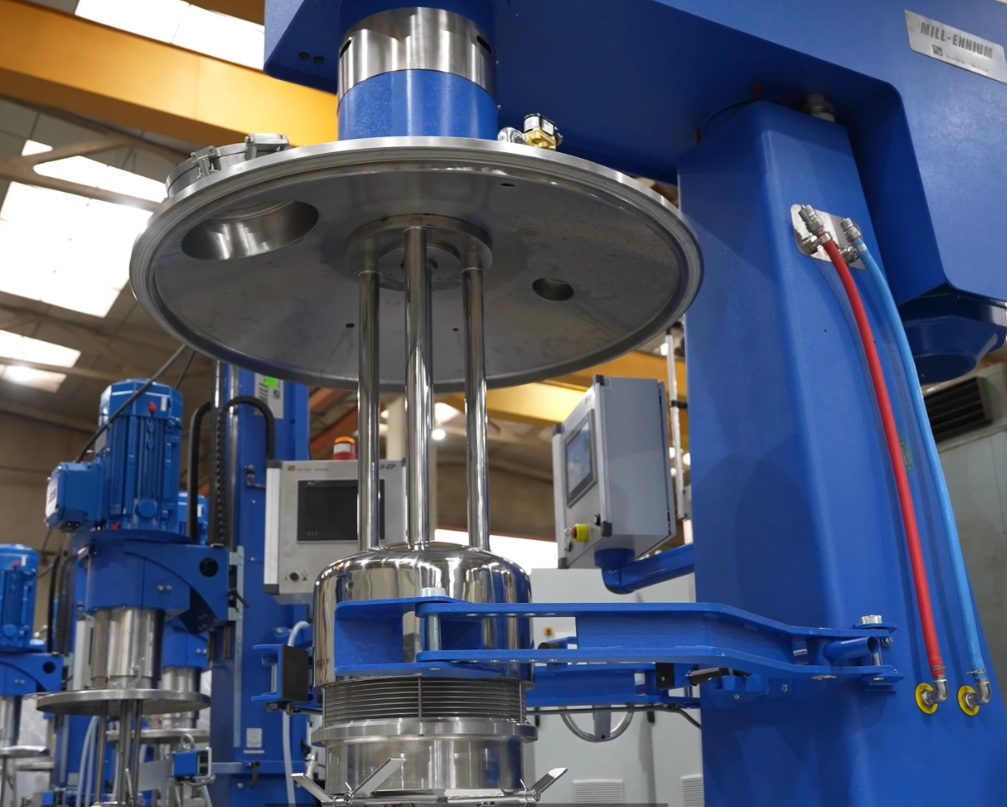
Why is it advisable to seek specialized technical advice when selecting wet grinding equipment?

Choosing the right mill is a key factor in optimizing your facility’s productivity, reducing energy costs, and ensuring the highest quality of the final product.

Since every formulation and production line has unique requirements, our technical and consulting team is at your disposal to assess your specific needs. Contact us and we will provide personalized advice on selecting the most suitable machinery, as well as guide you on how to optimize your production plant to get the most out of your process.

If you want to learn more about the wet grinding process and how to optimize it, read this article.

 

dispersion request information


Oliver + Batlle presents the new frontier in paint dispensing and packaging: the Additive Manufacturing 3D Nozzles service, custom-designed for each customer and need.

This approach transforms the concept of a simple product into a completely personalised service optimised for your production line.

Key advantages of the service

Our service transforms the concept of a simple component into a comprehensive customised solution, designed to maximise the performance of your production line based on the following pillars:

  1. Manufacturing efficiency and profitability
  • Increased speed: Achieve up to a 20% increase in manufacturing speed compared to conventional metal dispensers.
  • Time optimisation: Reducing the dispensing cycle is the key factor in increasing your total production capacity.
  • Cost reduction: Operational efficiency and the possibility of accessing annual supply contracts allow for a significant reduction in maintenance and replacement costs.
  1. Dosing quality and filling accuracy
  • No more drips and foam: The customised design ensures perfect flow even with difficult-to-fill products, eliminating common problems with standard nozzles.
  • A nozzle for every container: We implement the concept of an optimal diameter for each type of container, ensuring a millimetre-perfect fit that dramatically improves packaging quality.
  1. Customisation and material superiority

Thanks to additive manufacturing (3D printing), we design nozzles layer by layer with benefits that are impossible to achieve through traditional machining:

  • Minimum weight: Geometric optimisation allows for much lighter parts, facilitating handling and reducing mechanical stress on equipment.
  • Maximum impact resistance: We use advanced technical polymers that offer superior durability against shocks and intensive use in the plant.
  • Ad-hoc flexibility: We adapt each design to the exact specifications of your product and container after a preliminary study of your lines.

The Oliver + Batlle service

A subscription model tailored to your needs

Stop worrying about optimising your dosing equipment. Our 3D nozzle service offers you a convenient, efficient printing solution with no long-term commitment, tailored to your needs.

How does it work?

  1. Ad-hoc study and design: Unlike purchasing a product, we begin with a preliminary study of your products and packaging lines for CAD development and functional prototyping of your custom nozzle.
  2. Scheduled production and delivery: Once the design has been validated, scheduled deliveries of the custom nozzles are established, ensuring that you receive the components just when you need them.
  3. Total flexibility: You can change, interrupt or cancel the service at any time. If your production varies, we offer an annual supply contract (min. 6 units) with adjusted prices and the possibility of an express service with guaranteed fast delivery (24 hours in Europe and 72 hours in the rest of the world).

Prices and contact

The prices of our service are determined based on your customisation needs and the volume of your supply plan.

  • Request a Personalised Quote: To discover the potential savings and prices of additive nozzles or the design service for a new nozzle, contact our sales team.

Optimizing production in the construction sector requires technology capable of handling complex materials. In this article, we analyse how Oliver + Batlle‘s advanced engineering solved the packaging challenges of Saint-Gobain Weber UK, the undisputed leader in industrial mortars and cutting-edge solutions in the United Kingdom.

Brief description of the company

Saint-Gobain Weber Ltd is a multinational subsidiary of the prestigious French group Saint-Gobain. The company stands out for its specialization in solutions for the construction and renovation of buildings, providing everything from industrial mortars and ceramic adhesives to advanced thermal insulation systems for facades and floors. Its commitment to quality has positioned it as a benchmark in new construction and restoration projects.

The challenge: Processing high-viscosity and abrasive products

The project focused on a highly complex technical challenge: the processing and packaging of wet plaster for plasterboard (stucco products).

This technical material has physical properties that make it difficult to handle:

  • Specific density:25–1.35 kg/dm³.
  • High viscosity: Between 500 and 3000 poises.
  • Abrasive nature: Requires superior mechanical robustness to ensure constant flow and accurate dosing without damaging the equipment.

Objective of the “Turnkey” project

The main challenge was to implement a turnkey production line capable of automating a previously manual process, while complying with Saint-Gobain Weber’s demanding standards:

  • High Performance: Achieve a stable rate of 10 containers of 20 kg (15L) per minute.
  • Maximum Gravimetric Accuracy: Maintain a variability of less than ±100g per container to drastically reduce raw material waste.
  • Process Integration: Intelligent connection via a handshake system with two existing 3,000L dispersers in the plant.
  • Innovation in dosing: Design of ad-hoc nozzles to optimize product distribution, avoiding stains in the closure area and ensuring a clean finish.

The Oliver + Batlle Solution: High-strength engineering

At Oliver+Batlle, we implement a comprehensive solution that complies with IP-54 protection standards and is manufactured with AISI-316 stainless steel in all contact areas to combat abrasion.

A) Feeding and Process Integration

  • Progressive Cavity Pumping Units: Two 15 kW helical pumping units with NBR stators and chrome-plated AlSi-316L stainless steel rotors, specifically designed for handling abrasive products.
  • Optimized Distribution: Complete installation of pipes and valves for efficient flow from the production area to the packaging area.

B) Automated Packaging Line

  • Pailmanager V-Flex Denester: Automatic system with capacity for stacks up to 400 mm in height. It enables fully automated format changeover managed from the HMI, with memory for up to 100 recipes, and incorporates photoelectric safety barriers to ensure operational protection.
  • OB-130-T Gravimetric filling unit: Dual-head system based on the “2-in-1” concept, optimizing the filling cycle without compromising accuracy.
  • Mettler Toledo Technology: Use of IND570 weighing terminals, ensuring metrological-grade accuracy and reliability in each dosing cycle.
  • Peripheral Systems and Traceability: Includes DT-350-S lids dispenser with lid presence detector, lid closing station CR-130 for flat press-on lids with manual adjustment, and a checkweigher with automatic rejection for out-of-tolerance containers.
  • Comprehensive Service: Full project scope, from P&ID and layout design to technical training of plant personnel.

Results

Thanks to the engineering solution implemented by Oliver + Batlle Saint-Gobain Weber UK has completely transformed the operational capacity of its plant in Flitwick.

The automated line continuously manages destacking, filling, and closing operations, allowing a sustained production rate of 10 units per minute to be achieved. The use of the OB-130-T Gravimetric Filling Machine allows for interleaved filling, optimizing cycle time without compromising the precision required for high-viscosity products.

This technical approach maximizes the profitability and efficiency of the process:

  • Cost optimization: The high precision of ±100g, together with the automatic rejection system, eliminates costly overfilling and raw material waste, accelerating return on investment.
  • Operational agility: Downtime between batches is drastically reduced thanks to the automated format changeover managed via the HMI of the Pailmanager V-Flex.
  • Reliability and durability: The use of AISI-316 stainless steel and the robustness of the helical pump units ensure a long service life for components despite the abrasive nature of technical putty.

As a result, the overall performance of the installation is improved, ensuring the high efficiency and quality standards required by the Saint-Gobain group for its construction solutions.

Conclusion

The success achieved in this project demonstrates that high viscosity and the abrasive nature of technical materials  are not obstacles when the right technology is in place. The satisfaction of Saint-Gobain Weber UK, reflected in the words of Toni Wallis—who highlights that Oliver + Batlle‘s solution has enabled them to meet their highest efficiency standards—is the best endorsement of our engineering expertise.

If your plant is also facing challenges in the packaging of technical products, we invite you to discover how we can help transform your operations.


You can see the complete process in the following video available on our YouTube channel.


Introduction

A leading company in the industrial paints and coatings sector undertook a strategic project aimed at optimising its manufacturing and filling processes for solvent-based industrial paint. The objective was to implement a highly automated installation capable of handling complex formulations, multiple raw materials, and different batch sizes, whilst maintaining the highest standards of quality, safety, traceability, and environmental responsibility.

Oliver + Batlle participated in the development and implementation of the technological solutions required to meet these objectives, contributing its expertise in dosing systems, manufacturing processes, and process control for the paints industry.

Product to be processed

The project focused on the manufacturing and filling of solvent-based industrial paint, intended for the protection and decoration of surfaces, with high requirements in terms of homogeneity, repeatability, and final product performance.

Project objectives

The company sought a solution that would enable the manufacturing and filling of a wide variety of products, in different batch sizes, through fully automated and highly controlled processes.

The main technical challenges of the project were:

  • Management of a large number of raw materials, with more than 60 different products, including solids and liquids, many of them transferred via piping.
  • Ensuring the required quality for each formulation, regardless of its complexity.
  • Guaranteeing full traceability of raw materials and process operations.
  • Maintaining optimal safety and hygiene conditions, with a design focused on zero pollution, for both solids and liquids, despite working with solvent-based products.
  • Fully automating the production process through recipe execution from the control system.

Solutions provided by Oliver + Batlle

Oliver + Batlle developed and integrated a set of process and automation solutions, specifically designed to meet the requirements of a leading manufacturer in the sector.

Solid dosing and conveying

For the handling of solid raw materials, the following solutions were implemented:

  • Installation of four 6 m³ mini-silos for powder raw materials, with automatic transfer through a pneumatic conveying system running throughout the plant to the different consumption points.
  • Dosing station for solids not stored in silos, supplied from bags or big-bags, with direct pneumatic conveying to the dispersers used for large-batch production.
  • Mechanical conveying system with a capacity of up to 6 t/h, designed to automatically feed and dose solids to four dispersers located on the process platform.

Liquid dosing

The solution incorporates an automatic liquid dosing system, integrated into recipe management, enabling precise dosing of:

  • Major raw materials, such as resins and solvents.
  • A large number of additives, managed according to defined formulations.

Manufacturing and finishing processes

The Mill Base is manufactured in single-shaft and three-shaft dispersers, from which the product is transferred to intermediate tanks through milling processes.

The milled products are then transferred to finishing tanks of different capacities, equipped with mixing systems specifically designed according to the type of product and its rheological requirements.

Small-batch production

The solution combines large-batch manufacturing with short-run production through:

  • Four automatic dosing stations, capable of managing multiple different products per recipe.
  • Dosing heads with horizontal movement, facilitating manual dosing from drums.
  • A set of 19 process units, including dispersers, mixers, and milling systems, dedicated to small-batch production.

Automation and traceability

The entire installation is governed by a fully automatic control system, with recipe management and communication with the customer’s ERP, enabling centralised control of all manufacturing operations.

In addition, a barcode creation and reading system was integrated for manually added products, ensuring complete traceability of raw materials and the production process.

Results

The implemented solutions allow this leading company to operate a highly flexible, safe, and efficient industrial paint manufacturing and filling system, capable of handling a wide variety of formulations and batch sizes.

Key benefits achieved:

  • High production flexibility, adapted to a broad product portfolio.
  • Full automation, ensuring accuracy, repeatability, and process control.
  • Maximum safety and hygiene, with a plant designed to operate under zero-pollution conditions.
  • Strong environmental commitment, even in processes involving solvent-based products.

Our technical team can help you define the most suitable solution for your process