Tag Archive for: PRODUCTS

The evolution from powder formulations to aqueous suspensions (flows) has represented an important advancement in phytosanitary product manufacturing, offering benefits in safety, dosing, and the distribution of active ingredients.

This evolution responds both to the need to improve occupational safety and environmental protection and to the pursuit of greater efficiency in the application of phytosanitary products.

In this article, we outline the essential stages of the aqueous suspension production process and the key technologies required to optimize each step.

Why Choose Aqueous Suspensions for Phytosanitary Products?

Processing active ingredients in a liquid medium offers major advantages over traditional dry powder handling:

  • Enhanced Safety and Cleanliness: Reduces harmful dust emissions and minimizes operator exposure.
  • Precise Dosing and Application: Simplifies accurate measuring and allows for easier cleaning of spraying equipment.
  • Higher Biological Activity: Promotes a homogeneous distribution and a more consistent particle size of the active ingredient.

Critical Stages in the Phytosanitary Production Process

To ensure a stable suspension that meets CIPAC technical standards, the manufacturing process must be carefully engineered across five main stages:

Dispersion and Raw Material Incorporation

In this initial stage, active ingredients in powder form are incorporated into the liquid medium using industrial dispersing agitators. 

Due to the thermal sensitivity of certain active ingredients and the presence of corrosive or chlorinated components, it is important to use jacketed cooled vessels  (made of AISI 360L) and enclosed systems is vital to prevent dusting and foaming.
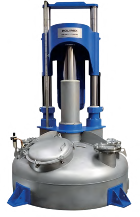
POLIMIX DPS 1 from 2,000 to 5,000 L (o liters)

Milling and Particle Size Reduction

The goal of milling is to ensure that 50% of the particles are smaller than 5 microns and 90% remain below 10 microns. Selecting the right milling technology at this stage is crucial, as it directly impacts both processing times and total plant energy consumption.

Finishing, Storage, and Homogenization

After milling, the product is transferred to finishing tanks equipped with variable speed radial-axial agitators. This allows different batches to be homogenized and additives or thickeners to be incorporated to stabilize the rheology before filling.
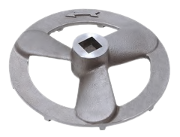
RADIAL-AXIAL AGITATOR TURBINE

Pumping, Filtration, and Final Packaging

To protect final product quality and prevent the presence of coarse particles or grinding media residues, pneumatic pumping and fine filtration systems are used. Finally, the product is filled using gravimetric filling equipment or filling systems adapted to different container formats and production capacities.

If you would like to save this information for your team or review detailed dispersion formulas, you can download the complete PDF guide to keep on hand. 

Technology Comparison: Optimizing Energy Consumption in Milling

Energy efficiency in the milling phase is one of the greatest operational challenges in phytosanitary plants. Comparative laboratory tests conducted with active ingredients such as copper oxychloride demonstrate significant efficiency variations depending on the chosen equipment—such as continuous horizontal bead mills (Supermill EHP) versus immersion basket mills (Mill-ennium RS):

One of the biggest challenges in manufacturing plants is the energy cost associated with milling. In laboratory trials conducted at Oliver + Batlle using copper oxychloride, two milling technologies were compared: continuous horizontal bead mill (Supermill EHP)  and immersion mill (Mill-ennium RS20), revealing significant differences in energy consumption and processing times:

  • Energy Savings: Under the tested conditions, immersion milling reduced energy consumption per liter produced by up to 77% compared with horizontal milling in two passes.
  • Time Efficiency: For the same production volume, processing time was reduced by nearly 80%.

Download the Full Phytosanitary Manufacturing Guide

Looking for deeper technical insights into machine parameters, dispersion formulas, grinding media selection, and turnkey plant engineering?

We have compiled a comprehensive technical e-book authored by Joaquín Oliver, Industrial Engineer and industry expert with over 40 years of experience. Inside, you will find:

Stay updated on our latest news on LinkedIn.
 

What characterises Hempel and its activity in the coatings industry?

Hempel is a multinational manufacturer of paints and coatings headquartered in Denmark, specialising in solutions for industrial, marine and protective coating applications. Its products are designed to provide resistance under demanding environmental conditions.

At its Polinyà facility in Barcelona, Oliver + Batlle developed an equipment solution for a pilot plant dedicated to the development and evaluation of new formulations.

What products are processed in the pilot plant?

The pilot plant is designed to carry out manufacturing trials for the development and definition of new formulations. The equipment must therefore offer the versatility required to work with different formulations and viscosities.

In addition, cleaning between batches is essential to prevent cross-contamination and ensure that residues from one manufacturing run do not affect subsequent trials.

What were the main technical challenges of the project?

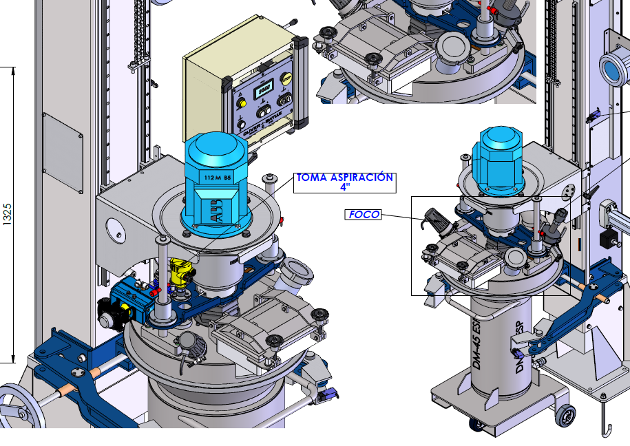
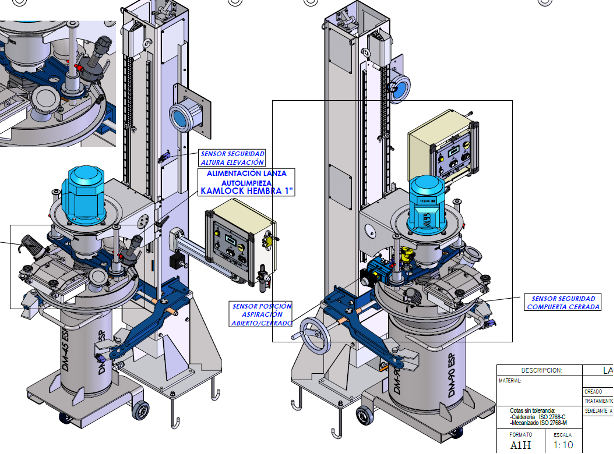
The main challenge was to integrate the various process, safety and cleaning functions into a compact piece of equipment: the DISPERMIX VF-4-N industrial disperser.

The limited surface area available on the telescopic lid required a specific configuration that could accommodate all the necessary accessories without compromising their integration or functionality.

The main technical requirements were as follows:

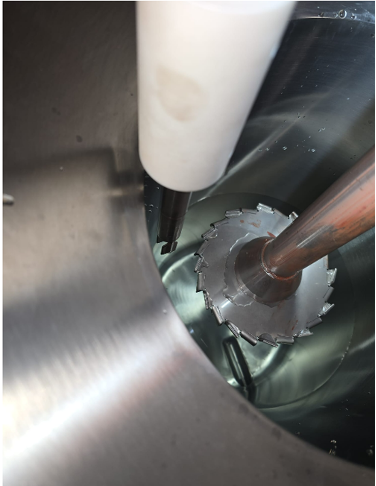
  • ATEX safety: integration of a product-level control system to ensure safe operation of the dispersing disc.
  • Solids addition: incorporation of a loading port with a hopper to facilitate bag emptying.
  • Dust extraction: integration of an extraction connection fitted with an automated valve.
  • Equipment cleaning: incorporation of a cleaning head connected to a pneumatic pumping system.
  • Process lighting: integration of a light to improve visibility during operation.

The equipment also had to handle a wide range of formulations, including high-viscosity paints. Effective cleaning of the disperser and manufacturing vessels at the end of each batch was another key requirement, helping to minimise the risk of cross-contamination.

How did Oliver + Batlle address the pilot plant’s requirements?

Oliver + Batlle developed a specific configuration of the DISPERMIX VF-4-N to make the best possible use of the available space on the telescopic  lid and integrate the different process, safety and cleaning accessories.

The solution brought together the raw material feeding, dust extraction, level control, lighting and cleaning systems within a single piece of equipment, adapting the configuration to the operational requirements of a pilot plant.

What disperser and vessel configurations were considered?

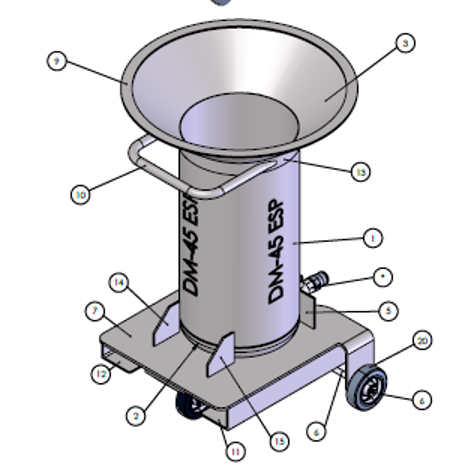
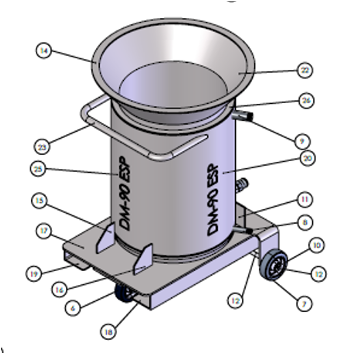
The project was based on the DISPERMIX VF-4-N disperser and included three compatible vessel models:

  • DM-45: its compact dimensions make integration between the internal components and the dispersing disc particularly challenging.
  • DM-90: equipped with a cooling system.
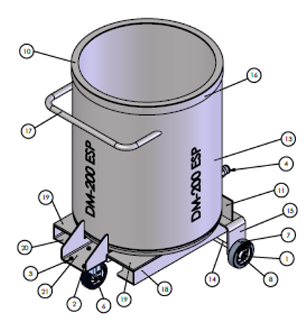
  • DM-200: higher-capacity vessel compatible with the configuration.

Compatibility with these three models allows the equipment to be adapted to different process conditions and production needs, providing flexibility for trials involving the development of new formulations.

DM-45

DM-200                                                                                DM-90 (refrigerated)

How was the batch cleaning system designed?

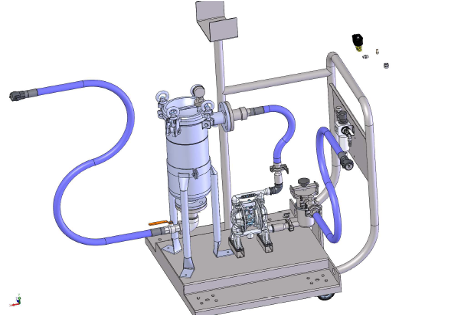
To facilitate cleaning operations, Oliver + Batlle incorporated a dedicated cleaning head connected to a pneumatic pumping unit, also included in the supply. This system pumps the solvent used for cleaning.

The system enables the equipment and manufacturing vessels to be cleaned at the end of each batch, facilitating product changeovers and reducing the risk of cross-contamination.

This function is particularly important in a pilot plant, where different formulations are processed sequentially and residues from one product must not interfere with subsequent trials.

Pump assembly that circulates the cleaning solvent

What results were achieved with the solution developed for Hempel?

The tests carried out during commissioning confirmed that the solution met the project’s main technical requirements.

Manufacturing versatility

The DISPERMIX VF-4-N demonstrated its ability to process the range of products envisaged for the pilot plant, including high-viscosity formulations.

Effective cleaning between batches

During the trials, the cleaning system enabled product changeovers without cross-contamination issues.

Optimised use of available space

The configuration made it possible to integrate the required process, safety and cleaning components into a compact unit, overcoming the space constraints on the disperser lid.

The project developed for Hempel Polinyà demonstrates how a tailored engineering solution can meet the specific requirements of a pilot plant, even when the available space limits the integration of different components.

By integrating multiple functions into a compact configuration, Oliver + Batlle provided a versatile solution for processing formulations with different viscosities and facilitating cleaning between batches — two essential aspects of new product development.

Do you need a dispersion solution tailored to your manufacturing process?

At Oliver + Batlle, we specialise in designing tailored engineering solutions for the paints and coatings industry. We develop equipment and configurations adapted to the requirements of each process, integrating manufacturing, safety and cleaning functions to meet the operational needs of each facility.

Contact our sales team to discover how we can help you develop a dispersion solution tailored to your manufacturing and new product development requirements.

Stay updated on our latest news on LinkedIn.
 

Immersion Milling: A technical guide to optimizing coating efficiency 

Immersion grinding is a pigment dispersion and milling process that uses a circular basket mill submerged directly into the product. Unlike horizontal grinding systems, this technology eliminates the need for pumps and hoses, helping to reduce product losses and speed up cleaning operations. It also allows batches of up to 2,000 litres to be processed, with product viscosities of up to 10,000 Centipoises.

But what differentiates the various immersion and circular basket mills available on the market? What features should be considered when selecting the most suitable equipment for each process?

Basket mill technology has become widely established in the coatings industry, and leading equipment manufacturers have developed different ranges and configurations to meet the requirements of each application. Differences in geometry, size, number of agitation shafts, basket configuration and cooling capacity can make selecting the right equipment a complex decision.

Read more

fabricación de fitosanitarios / manufacture of phytosanitary products

The manufacture of liquid phytosanitary products has some characteristics that must be taken into account when choosing the most efficient dispersers and mills. Liquid phytosanitary products or flowable products are terms generally used to name herbicides, fungicides, insecticides or fertilisers. In the past, this type of product was supplied in powder or soluble pellets. However, […]

sistema de limpieza de tuberías | pipeline cleaning system

Having an automated pipeline cleaning system in paint and paint-related product factories can be decisive in optimising production processes and achieving greater profitability. Besides, it is also environmentally friendly. Read more