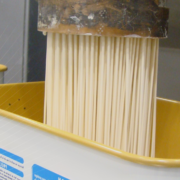
Oliver + Batlle presents the new frontier in paint dispensing and packaging: the Additive Manufacturing 3D Nozzles service, custom-designed for each customer and need.

This approach transforms the concept of a simple product into a completely personalised service optimised for your production line.

Key advantages of the service

Our service transforms the concept of a simple component into a comprehensive customised solution, designed to maximise the performance of your production line based on the following pillars:

  1. Manufacturing efficiency and profitability
  • Increased speed: Achieve up to a 20% increase in manufacturing speed compared to conventional metal dispensers.
  • Time optimisation: Reducing the dispensing cycle is the key factor in increasing your total production capacity.
  • Cost reduction: Operational efficiency and the possibility of accessing annual supply contracts allow for a significant reduction in maintenance and replacement costs.
  1. Dosing quality and filling accuracy
  • No more drips and foam: The customised design ensures perfect flow even with difficult-to-fill products, eliminating common problems with standard nozzles.
  • A nozzle for every container: We implement the concept of an optimal diameter for each type of container, ensuring a millimetre-perfect fit that dramatically improves packaging quality.
  1. Customisation and material superiority

Thanks to additive manufacturing (3D printing), we design nozzles layer by layer with benefits that are impossible to achieve through traditional machining:

  • Minimum weight: Geometric optimisation allows for much lighter parts, facilitating handling and reducing mechanical stress on equipment.
  • Maximum impact resistance: We use advanced technical polymers that offer superior durability against shocks and intensive use in the plant.
  • Ad-hoc flexibility: We adapt each design to the exact specifications of your product and container after a preliminary study of your lines.

The Oliver + Batlle service

A subscription model tailored to your needs

Stop worrying about optimising your dosing equipment. Our 3D nozzle service offers you a convenient, efficient printing solution with no long-term commitment, tailored to your needs.

How does it work?

  1. Ad-hoc study and design: Unlike purchasing a product, we begin with a preliminary study of your products and packaging lines for CAD development and functional prototyping of your custom nozzle.
  2. Scheduled production and delivery: Once the design has been validated, scheduled deliveries of the custom nozzles are established, ensuring that you receive the components just when you need them.
  3. Total flexibility: You can change, interrupt or cancel the service at any time. If your production varies, we offer an annual supply contract (min. 6 units) with adjusted prices and the possibility of an express service with guaranteed fast delivery (24 hours in Europe and 72 hours in the rest of the world).

Prices and contact

The prices of our service are determined based on your customisation needs and the volume of your supply plan.

  • Request a Personalised Quote: To discover the potential savings and prices of additive nozzles or the design service for a new nozzle, contact our sales team.
Optimizing production in the construction sector requires technology capable of handling complex materials. In this article, we analyse how Oliver + Batlle‘s advanced engineering solved the packaging challenges of Saint-Gobain Weber UK, the undisputed leader in industrial mortars and cutting-edge solutions in the United Kingdom.

Brief description of the company

Saint-Gobain Weber Ltd is a multinational subsidiary of the prestigious French group Saint-Gobain. The company stands out for its specialization in solutions for the construction and renovation of buildings, providing everything from industrial mortars and ceramic adhesives to advanced thermal insulation systems for facades and floors. Its commitment to quality has positioned it as a benchmark in new construction and restoration projects.

The challenge: Processing high-viscosity and abrasive products

The project focused on a highly complex technical challenge: the processing and packaging of wet plaster for plasterboard (stucco products).

This technical material has physical properties that make it difficult to handle:

  • Specific density:25–1.35 kg/dm³.
  • High viscosity: Between 500 and 3000 poises.
  • Abrasive nature: Requires superior mechanical robustness to ensure constant flow and accurate dosing without damaging the equipment.

Objective of the “Turnkey” project

The main challenge was to implement a turnkey production line capable of automating a previously manual process, while complying with Saint-Gobain Weber’s demanding standards:

  • High Performance: Achieve a stable rate of 10 containers of 20 kg (15L) per minute.
  • Maximum Gravimetric Accuracy: Maintain a variability of less than ±100g per container to drastically reduce raw material waste.
  • Process Integration: Intelligent connection via a handshake system with two existing 3,000L dispersers in the plant.
  • Innovation in dosing: Design of ad-hoc nozzles to optimize product distribution, avoiding stains in the closure area and ensuring a clean finish.

The Oliver + Batlle Solution: High-strength engineering

At Oliver+Batlle, we implement a comprehensive solution that complies with IP-54 protection standards and is manufactured with AISI-316 stainless steel in all contact areas to combat abrasion.

A) Feeding and Process Integration

  • Progressive Cavity Pumping Units: Two 15 kW helical pumping units with NBR stators and chrome-plated AlSi-316L stainless steel rotors, specifically designed for handling abrasive products.
  • Optimized Distribution: Complete installation of pipes and valves for efficient flow from the production area to the packaging area.

B) Automated Packaging Line

  • Pailmanager V-Flex Denester: Automatic system with capacity for stacks up to 400 mm in height. It enables fully automated format changeover managed from the HMI, with memory for up to 100 recipes, and incorporates photoelectric safety barriers to ensure operational protection.
  • OB-130-T Gravimetric filling unit: Dual-head system based on the “2-in-1” concept, optimizing the filling cycle without compromising accuracy.
  • Mettler Toledo Technology: Use of IND570 weighing terminals, ensuring metrological-grade accuracy and reliability in each dosing cycle.
  • Peripheral Systems and Traceability: Includes DT-350-S lids dispenser with lid presence detector, lid closing station CR-130 for flat press-on lids with manual adjustment, and a checkweigher with automatic rejection for out-of-tolerance containers.
  • Comprehensive Service: Full project scope, from P&ID and layout design to technical training of plant personnel.

Results

Thanks to the engineering solution implemented by Oliver + Batlle Saint-Gobain Weber UK has completely transformed the operational capacity of its plant in Flitwick.

The automated line continuously manages destacking, filling, and closing operations, allowing a sustained production rate of 10 units per minute to be achieved. The use of the OB-130-T Gravimetric Filling Machine allows for interleaved filling, optimizing cycle time without compromising the precision required for high-viscosity products.

This technical approach maximizes the profitability and efficiency of the process:

  • Cost optimization: The high precision of ±100g, together with the automatic rejection system, eliminates costly overfilling and raw material waste, accelerating return on investment.
  • Operational agility: Downtime between batches is drastically reduced thanks to the automated format changeover managed via the HMI of the Pailmanager V-Flex.
  • Reliability and durability: The use of AISI-316 stainless steel and the robustness of the helical pump units ensure a long service life for components despite the abrasive nature of technical putty.

As a result, the overall performance of the installation is improved, ensuring the high efficiency and quality standards required by the Saint-Gobain group for its construction solutions.

Conclusion

The success achieved in this project demonstrates that high viscosity and the abrasive nature of technical materials  are not obstacles when the right technology is in place. The satisfaction of Saint-Gobain Weber UK, reflected in the words of Toni Wallis—who highlights that Oliver + Batlle‘s solution has enabled them to meet their highest efficiency standards—is the best endorsement of our engineering expertise.

If your plant is also facing challenges in the packaging of technical products, we invite you to discover how we can help transform your operations.


You can see the complete process in the following video available on our YouTube channel.


What advantages do CFD and FEM simulations offer in the design of industrial mizers?

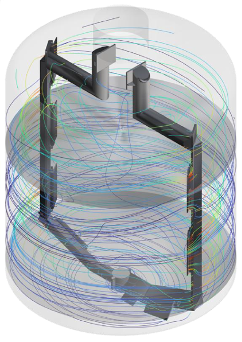
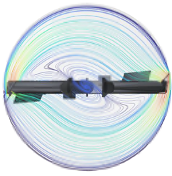
In modern industrial design, technical simulation has become an indispensable tool because it allows the actual behaviour of an mixing equipment to be predicted long before the manufacturing stage begins. Traditionally, the industry has relied on generic estimates, but thanks to Computational Fluid Dynamics (CFD), it is possible to accurately visualise the flow of the product inside the tank, while Finite Element Analysis (FEM) guarantees the structural integrity of the equipment.


This methodology provides unmatched accuracy by eliminating the margin of error that often results from the use of generic power curves found in technical literature. In addition, it gives engineers great versatility, allowing them to design equipment that is capable of processing products with different densities and viscosities, adapting perfectly to both Newtonian and non-Newtonian fluids.

What are the main anchor mixer designs and which one should you choose?

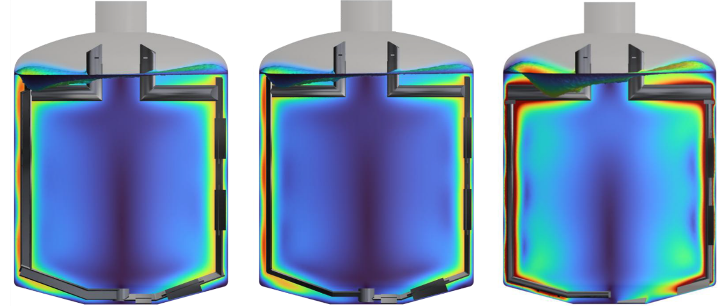
Selecting the right geometry is critical to the success of the process. To facilitate this analysis, three key geometric configurations that meet different industrial needs have been compared:

  1. Flat plate anchor with rear reinforcements: This is the robust reference design, which has been specifically designed to provide maximum structural rigidity for the most demanding applications.
  2. Bent flat plate anchor: This configuration represents an optimised evolution in mixing engineering, as it significantly reduces weight while maintaining hydraulic efficiency.
  3. Tube anchor without reinforcements: This is an alternative hydrodynamic design aimed at applications with specific requirements for higher agitation speeds.


How can fluid dynamic performance be improved and dead zones in the tank be avoided?

The detailed design of the anchor geometry is a critical factor in controlling product movement and achieving total process control.

In terms of tank wall efficiency, all our designs ensure continuous renewal of the fluid in contact with the surfaces through the use of scrapers, which is essential to prevent the formation of thermal dead zones that could compromise product quality.

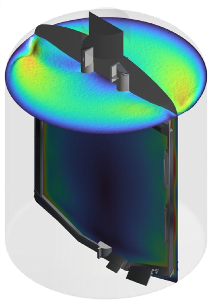
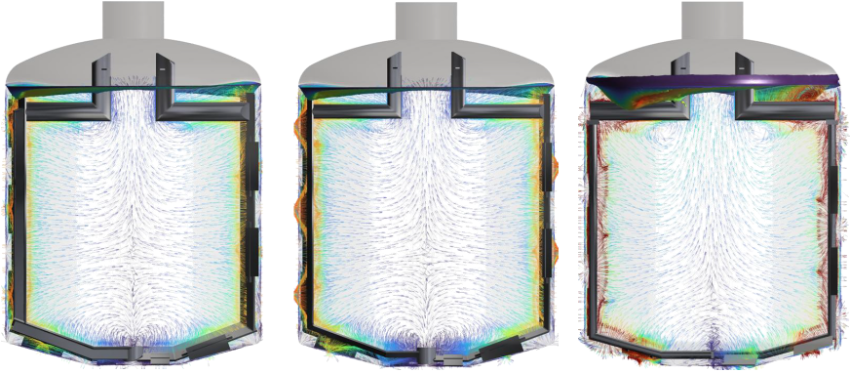
With respect to rotational flow, CFD simulations clearly show that the maximum fluid velocity is concentrated at the tank periphery. If the production process requires a strong axial flow in the central region, additional mixing elements must be incorporated in that area.


Furthermore, hydrodynamic performance also allows optimisation of operating speed; for example, simulations show that while flat-plate designs operate effectively at just 12 rpm, the tube anchor design without reinforcements requires speeds of up to 25 rpm to achieve equivalent mixing performance.

How to calculate motor power for non-Newtonian and high-viscosity fluids?

One of the key advantages of advanced simulations is the ability to process complex products with a high level of reliability. In industry, a common mistake is to treat a complex fluid as Newtonian, which can often lead to unnecessary oversizing of the mixer motor.

To address this issue, CFD simulation analyses the actual shear rate of the product in motion, allowing us to calculate the so-called ‘effective viscosity’. Accurate determination of this value allows the required installed power to be safely reduced compared to the oversizing typically resulting from traditional analytical calculations.

All of this applies across a wide operating range , with flow behaviour analysed from very low viscosities up to extreme demands of 2000 Poise. As a result, the final equipment configuration is accurately tailored to the specific density and consistency of your product.


How to ensure structural strength and optimise the weight of the mixer?

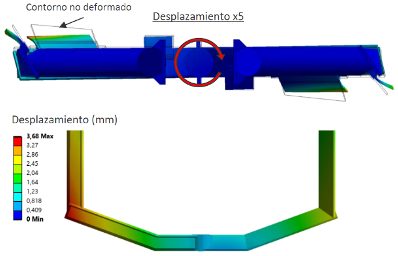
An industrial mixer must not only provide effective mixing performance but also ensure durability and safety throughout its service life. FEM (Finite Element Analysis) simulation ensures mechanical integrity while enabling cost optimisation.

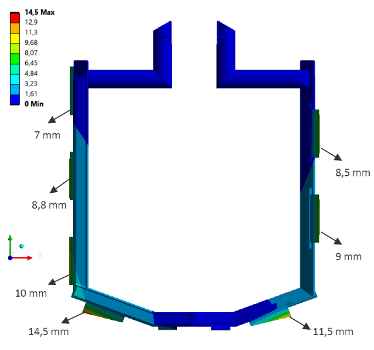
For example, in terms of Factor of Safety, the flat-plate anchor design with rear reinforcements provides a very conservative margin of FoS = 2.2, making it suitable for withstanding extreme loads without risk of failure.


On the other hand, if we are looking for material efficiency, stress analysis allows us to accurately identify critical load points so that reinforcements can be applied only where strictly necessary, thus preventing structural failure due to plastic deformation under high viscosity conditions.


The result of this analysis is the development of a bent flat-plate anchor design, which achieves an impressive 41% reduction in the equipment weight , while maintaining similar hydrodynamic performance and significantly reducing material costs.

Why choose Oliver + Batlle’s customised mixers for your industrial process?

Thanks to the comprehensive implementation of advanced simulation, choosing Oliver + Batlle technology offers direct competitive advantages for your production plant.

Energy savings: Precisely dimensioned motors optimised for non-Newtonian fluids, avoiding unnecessary energy consumption.

Efficient design: Optimisation of geometry and construction materials to improve overall equipment efficiency and significant reduction in your equipment’s carbon footprint.

Custom design: Each mixer is configured according to the specific viscosity and density range of your process, avoiding generic solutions that may compromise efficiency and productivity.

Do you need advice on how to optimise your agitation process?

Each industrial process has specific requirements in terms of viscosity, density, temperature and consistency. Our technical team can evaluate your application and recommend the most suitable geometry, power and configuration, ensuring optimised energy efficiency and structural reliability.

Contact us for a tailored technical study and to optimise your plant’s performance with confidence.

You can also find all the information about our range of Oliver + Batlle industrial mixers, where you will find tailor-made solutions for every production need.


Challenge: Increase production capacity without expanding facilities, working with variable batches of varnishes and water-based and solvent-based paints.

Solution: Polimix DPS-5000-TRC ATEX disperser.

Result: Significant increase in production capacity, greater operational flexibility, and reduction in manual operator intervention.


1. IRURENA GROUP

IRURENA Group is a family-owned industrial company founded in 1969, specialized in the manufacture of varnishes and paints for industrial applications, mainly on wood, in both water-based and solvent-based formulations.

2. Products and Manufacturing Challenges

  • Water-based paints for industrial applications on wood
  • Solvent-based paints with ATEX requirementsTechnical complexity: The variability of formulations and production volumes required a dispersion system capable of adapting to different products while maintaining process quality and production efficiency.
  • Industrial varnishes for high-quality professional finishes on wood

Technical complexity: The variability of formulations and production volumes required a dispersion system capable of adapting to different products while maintaining process quality and production efficiency.

3. Project Objectives

Main objective: Increase the production capacity of the existing plant by incorporating new dispersion equipment capable of working with both small and large batches, without the need to expand facilities or modify the manufacturing platform.

Challenge Description
Space Integration of equipment in a reduced space, within an already operational production facility.
Coordination Technical coordination with different project contractors, ensuring proper integration with auxiliary systems for liquid and solid feeding, dust and vapor extraction, cleaning solvents, complying with ATEX requirements.
Installation Execution of complex maneuvers, conditioned by equipment dimensions and plant access limitations.

Critical requirement: The entire project had to guarantee safe, reliable operation oriented toward optimizing daily operations.

4. Implemented Solution


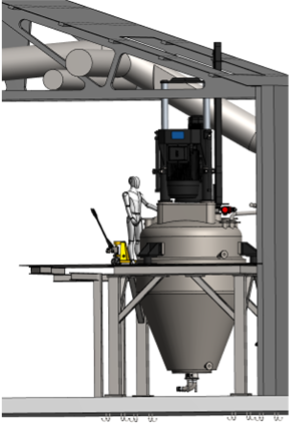
Polimix DPS-5000-TRC ATEX Equipment

Oliver + Batlle designed and manufactured a high-power disperser specifically configured for the client’s production needs, ensuring maximum efficiency and operational safety.

Main Technical Features

  •   Truncated-conical design: Allows efficient work with both small and large product volumes
  •   Disperser shaft raising and lowering system: Provides flexibility and control during the manufacturing process
  •   Half-pipe cooling jacket: Ensures thermal stability of the product during dispersion
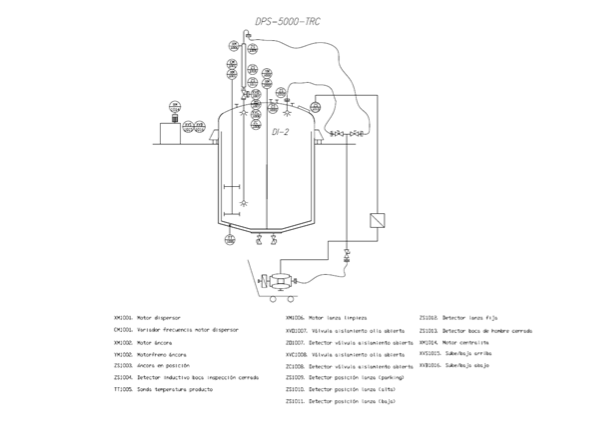
  •   Automatic cleaning system: Using mobile lances, with integrated process control
  •   Complete control of the equipment: HMI touchscreen in classified zone, while  PLC and electrical cabinet are located in safe area, fully compliant with ATEX requirements.

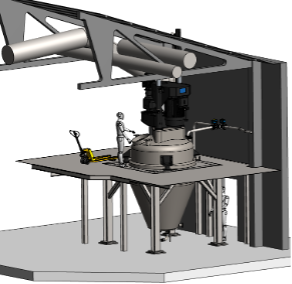
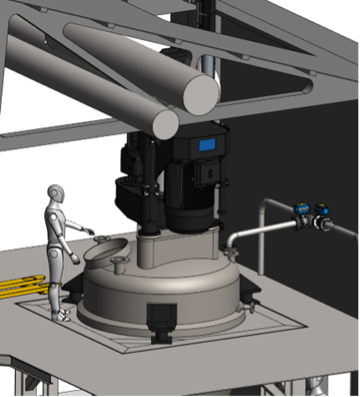
The equipment was installed on a carbon steel support structure with primer coating, designed at the same height as the existing production platform. Oliver + Batlle provided the loads transmitted to the floor so that the client could execute the corresponding foundations, as well as the anchor plates on which the structure and the equipment rest. The position of the liquid and powder loading connections and the vapour/dust extraction points was also defined.

A specialized technician from Oliver + Batlle coordinated the positioning operations, final assembly, and commissioning of the equipment, ensuring its proper integration into the plant.

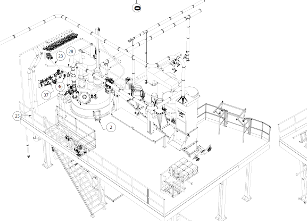
Process diagram of supplied equipment:

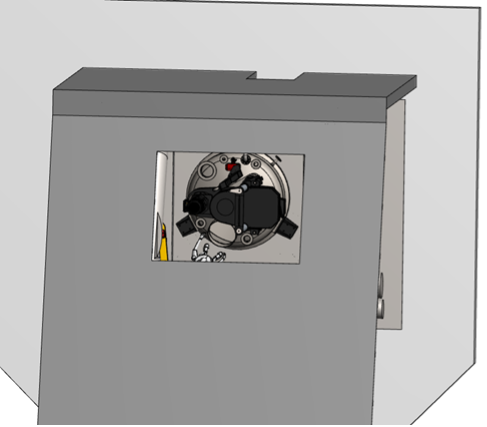
3D views of the equipment on its structure, integrated in the existing factory:

5. Results

  •  Significant increase in the production capacity of the existing plant without the need to expand facilities
  • Maximum operational flexibility: production of large and small batches of a wide variety of products using a single disperser
  • Improved efficiency of the production process through integrated automatic control
  • Reduced operator intervention: manual and automatic operation, and integrated cleaning system

6. Conclusion 

This project demonstrates how a customized engineering solution, properly integrated into an existing installation, optimizes production and prepares the plant for future growth.

The combination of specialized technical design, ATEX regulatory compliance, integration within reduced space, and process automation has enabled IRURENA GROUP to strengthen its competitive position in the industrial coatings market.

1. COMPANY OVERVIEW

Sakata INX is a Japan-based multinational company and a global leader in the development and manufacture of printing inks.

Its Spanish subsidiary, Sakata INX España, S. A., operates a production facility offering a wide range of high-quality inks for the graphic sector. These products are manufactured using advanced technologies in varnish production and pigment dispersion, ensuring excellent performance and superior print quality.

The company’s commitment to innovation and continuous improvement has led it to modernise its manufacturing processes to meet the high standards of international markets.

2. PRODUCT TO BE PROCESSED

The project focused on optimising the production of a white printing ink, specifically designed for application on plastic packaging films.

This white ink acts as an opaque background layer, playing a key role in the final visual quality by enabling a clear and uniform reproduction of colours printed on top.

Due to its high opacity requirements, the formulation contains a high concentration of titanium dioxide (TiO?) — a pigment known for its covering power, but also for its high density, cost, and difficult handling properties.

3. PROJECT OBJECTIVES

Prior to implementing the new system, the unloading and dispersion of a single Big Bag of TiO? took approximately one hour, creating bottlenecks in the production line.

The client needed to significantly reduce this time without compromising product quality or operational safety.

Oliver + Batlle was tasked with developing a solution capable of:

  • Increasing the speed of TiO? dosing and dispersion.
  • Allowing for continuous, parallel operation to avoid production downtime.
  • Improving handling safety and cleanliness.
  • Maintaining or enhancing final product quality.

4. TECHNICAL SOLUTION IMPLEMENTED BU OLIVER + BATLLE

The solution integrates a high-capacity, safe and efficient powder handling system, a high-performance conical disperser, a pneumatic transfer and filtration group, and two gravimetric filling lines adapted to multiple packaging formats.

Powder handling system

  • Tubular screw conveyor made of carbon steel, with discharge outlet feeding into the disperser.
  • Driven by a 9.2kW motor.
  • Powder handling capacity: up to 13 ?m³/h
  • Three loading points:
    • Two Big Bag inlets, enabling parallel operation (while one bag is being emptied, the next is positioned for uninterrupted feeding)
    • One manual sack inlet, providing  flexibility for smaller batches or special formulations

Dispersion systems

  • POLIMIX DPS-7500-TRC conical disperser, engineered for large-scale, high-demand production
    • Total capacity: 7,500 litres
    • Main motor: 132 kW
    • Two dispersing blades: diameters 675 mm and 450 mm
    • Half-pipe cooling jacket for temperature control
    • Vertical condenser with a 2 heat exchange surface

The disperser design ensures effective incorporation of dense pigments and a highly homogeneous mixture. Its cylindro-conical geometry optimises product flow towards the dispersing blades and improves dispersion performance.

Automatic cleaning system

  • Motorised cleaning lance with rotating head
  • 3″ pneumatic pump fitted with particle filter
  • Nominal flow rate: 150 l/min

This system allows rapid and safe cleaning between batches, reducing downtime and avoiding cross-contamination.

Transfer and filtration

  • GBN12/SBF-0102 transfer and filtration unit, pneumatically driven (2″)
  • 31-litre basket filter with 200-micron mesh, ensuring product cleanliness prior to filling

Filling lines

Two gravimetric filling lines cover a wide range of formats:

1.PALLET 1500/G

  • For 200-litre drums and IBCs
  • Equipped with a floor scale rated up to 1,500 kg

2. OB-130

  • For cans up to 30 kg
  • Includes an integrated 30 kg scale


5. RESULTS ACHIEVED

The implementation of the new solution brought a significant improvement in production performance:

  • Over 60% reduction in TiO? unloading and dispersion time
  • Continuous operation enabled by dual Big Bag inlets, eliminating handling delays
  • Increased powder flow rate, outperforming the previous system
  • Higher productivity and process consistency, without compromising product quality
  • Improved safety and cleanliness, through a closed and automated solution

In summary, the collaboration between Sakata Ink España and Oliver + Batlle has resulted in a robust, high-capacity and efficient installation tailored to the demanding needs of white ink production.

It is a flexible, high-performance solution that ensures top-quality standards in one of the most critical areas of the printing ink manufacturing process.