A new O+B Success story for Nippon Paint

A global client with a long-term vision

Founded in 1881, Nippon Paint is one of the world’s leading companies in the manufacturing of paints and coatings. With over 140 years of history, the Japanese company operates in more than 30 countries, offering innovative solutions for sectors as diverse as decorative, industrial, automotive, and marine paints.

In China, Nippon Paint has built a robust industrial ecosystem with plants specializing in the production of water-based decorative paint. These facilities are designed to meet the demands of a dynamic and highly competitive market, where production efficiency, automation, and environmental respect are key factors.

More information: nipponpaint-holdings.com/en/


The challenge: 30 tons of decorative paint per hour

The project’s objective was clear and ambitious: to design and install an automated line capable of manufacturing and packaging 30,000 kg of white decorative paint (water-based) per hour, with maximum reliability and precision. This was the third consecutive project that O+B carried out for Nippon Paint in China, following two similar installations in Xianning (Hubei) and Zhengzhou (Henan). This continuity reflects the client’s confidence in our ability to deliver high-performance turnkey industrial solutions


O+B’s technical solution: Comprehensive process automation

The project was developed based on a modular, highly automated solution that encompasses everything from raw material handling to final product packagingEach stage of the process was designed to maximize performance and ensure complete traceability

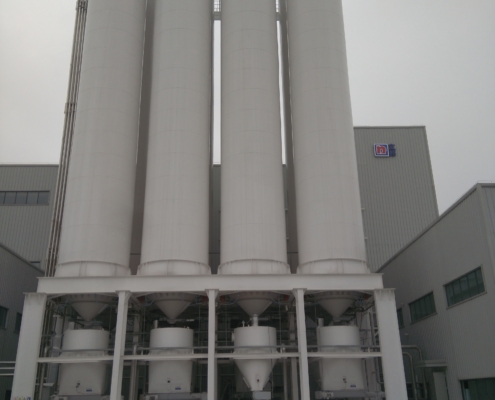
1. Raw material storage eight 300 m³ silos were installed to store powdered raw materials such as calcium carbonate, kaolin, talc, and titanium dioxide
2. Automatic transport and dosing of solids

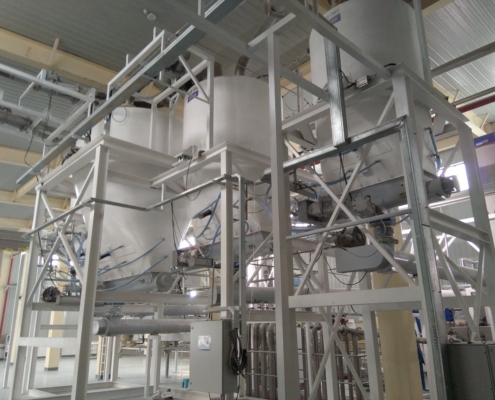
A pneumatic transport system with a capacity of between 15 and 30 tons per hour feeds two waiting hoppers. Each hopper is dedicated to a group of raw materials: one for carbonate, kaolin, and talc, and another exclusively for TiO?, allowing for separate and precise management.
3. Automatic liquid dosing

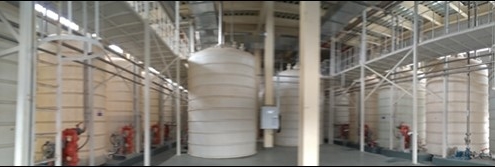
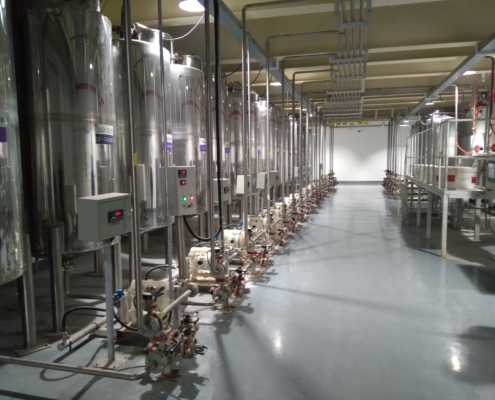
The automated system manages the dosing of 18 emulsions and 40 liquid additives, ensuring precision, repeatability, and reduction of human errors.
4. Solid dispersion and mill base manufacturing

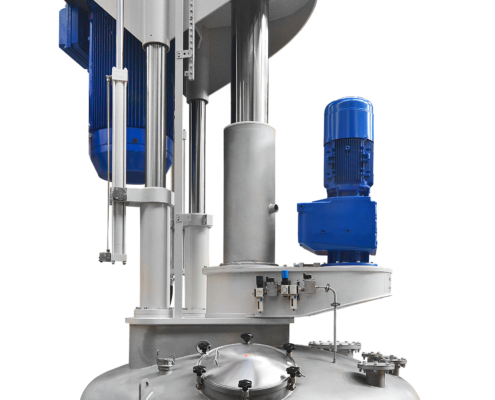
The critical mixing stage is carried out with a POLIMIX DPS-15000-OR coaxial disperser, capable of simultaneously incorporating solids from both hoppers. Its dispersion capacity of up to 50 tons per hour ensures very short cycle times and perfect product homogeneity.


5. Discharge and final homogenization

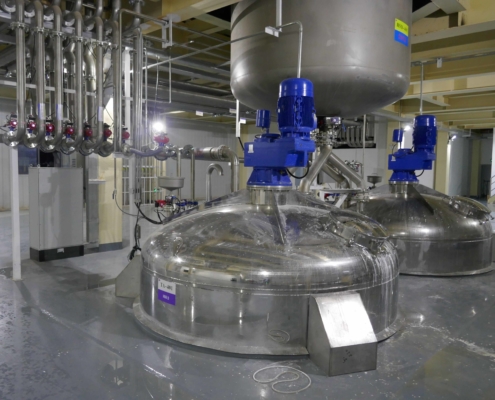
The mill base is discharged by gravity into two TA-22000 finishing tanks, designed to receive large volumes with continuous agitation, ensuring uniform mixing before packaging.
 

6. Performance validation

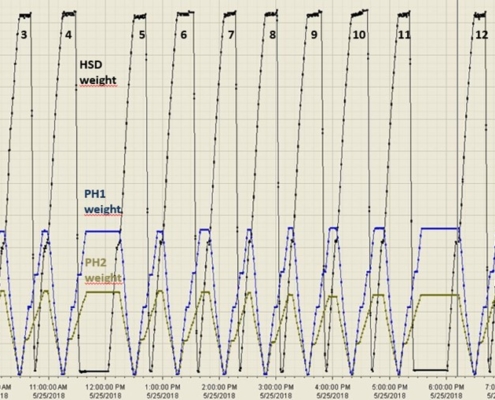
The analysis of the actual weight in the DPS-15000-OR and the two solid hoppers throughout a workday demonstrates that the system is capable of producing 30,000 kg of paint in less than 60 minutes, thus meeting the set objective.
 

7. High-speed automatic packaging

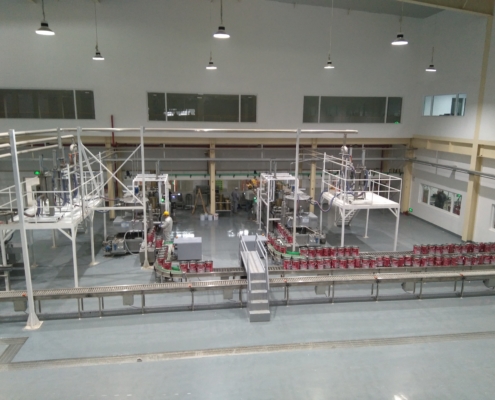
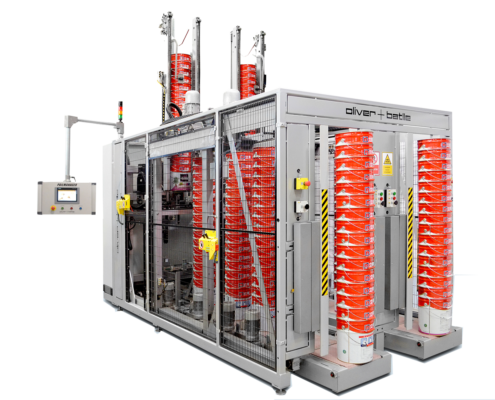
The finished paint is packaged using two automatic FLASH-25-TX lines, each equipped with PAILMANAGER-VX systems for feeding and handling 18-liter containers. This system allows a packaging rate of 14 containers per minute per line, with quick format change and minimal manual intervention.


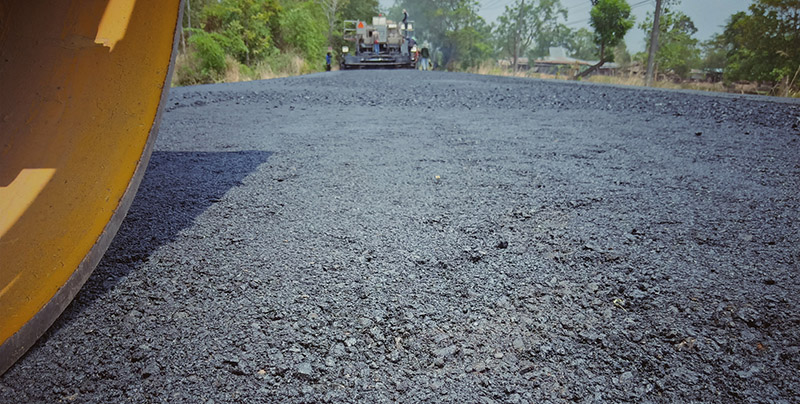
A bituminous mixture is made up of a binding material that encases each mineral particle of an aggregate, regardless of its grading. They traditionally come in two types: cold bituminous mixtures and hot bituminous mixtures.

Cold mixtures are those that can be manufactured with a cold or hot bituminous binder and a composition of aggregates, generally cold. These mixtures can be handled and spread at room temperature. Many of these products are storable.

Hot bituminous mixtures, on the other hand, are made with a binder that needs to be heated. The mixture temperature in this case must be above ambient temperature when applied or laid on site.

One type of binder commonly used in bituminous mixtures are hydrocarbon binders. It is a high viscosity type of binding agent, produced from natural hydrocarbons, which varies in consistency depending on the temperature (thermoplastic character) and offers good adherence to aggregates.

As for aggregates, which come from fragmented rock, their chemical and surface activity against water and bituminous binders depends on their composition and grading.

mezcla bituminosa, bituminous mixture

Bituminous mixture properties

In general, bituminous mixtures must be manufactured according to the properties required for the application they are to be used for, which can be extremely diverse. There are a series of properties that can be strengthened to a greater or lesser extent, taking into account the mixture’s composition, the materials, the dosing and the product’s manufacturing conditions.

These properties include:

  • Stability: the ability to support loads and resist the stresses to which it will be subjected, while retaining a certain series of deformation values.
  • Resistance to plastic deformation: bituminous mixtures feature a viscoelastic behaviour, leading to a series of deformations when low speed and high temperature loads are applied to it. The material’s required rheology for the specific project in which it is to be applied, a concept that was introduced in our article on thixotropy, must be taken into account at the manufacturing stage.
  • Fatigue resistance: bituminous mixtures are elastic at low temperature and at high speeds, but load repetition produces progressive wear due to material fatigue which results in an increase in deformation and cracking.
  • Slip resistance: when this type of product is manufactured to be applied on pavement or road wearing courses, for example, it must provide adequate slip resistance for a given number of years.
  • Impermeability: as in the case of slippage, bituminous mixtures used on top layers must protect the infrastructure against water infiltration action. Sometimes, impermeability can also be ensured with the lower layers, for example when using a porous mixture that removes surface water by infiltration.
  • Durability: sun, air, water or ice as well as vehicle oils or fuels affect the durability of the mixture used, for example on the wearing courses.

These properties will be strengthened or modified, depending on whether the product is to be applied on wearing courses, intermediate layers or base courses, since the function and exposure of their mixtures to environmental conditions is different.

manufacturing plant

Bituminous mixture manufacturing process

Hot bituminous mixtures are manufactured with asphalt bitumens at a higher or lower temperature, depending on the viscosity of the binder used. The aggregates that go into the mix are also heated so that they do not lower the binder’s temperature when they are added to the mix.

Bituminous binders provide efficient and flexible bonds, for example in road construction, thanks to their viscoelastic properties, as mentioned above. Since binder behaviour varies depending on ambient temperature, the mix should be manufactured using the binder that best adapts to the temperature range to which the mix is to be subjected once it has been applied to the pavement.

There is also a number of products that modify asphaltic bitumens and are obtained by dispersing polymers or rubber, among other materials, in the mix. These modified products can improve the binder’s properties when exposed to high or low temperatures.

Manufacturing equipment

Just as the bituminous mixture formula is adapted to the application’s requirements and the place where it will be used, Oliver + Batlle’s bituminous mixtures’ manufacturing machinery is adapted to each product’s characteristics.

The industrial agitators for bituminous products by O+B offer technified vessels combining fast axes and slow anchors as well as monitored heat supply. Our technification, together with our engineering team, develops turnkey projects that are adapted to a specific product’s manufacturing process.

We offer solutions for asphaltic bitumen manufacturing for large industrial batches as well as for small and medium-sized production. For mixtures with any type of fluidity, our solutions such as the Hidrobat Planetary Mixer, or DISPERMIX mixers, offer a robust solution that requires only a simple maintenance for a greater optimisation of the production process.

We manufacture storage tanks for this type of product with heated systems (that can reach up to 180º), full insulation capacity and an internal stirrer that keeps the binder continuously moving. In addition, we design the necessary process engineering to integrate any of our equipment into your manufacturing plant.

Request further information about our manufacturing equipment for bituminous products and follow us on LinkedIn to keep up to date with our news.


automatización industrial

Industrial Automation: How to Optimize Manufacturing Processes

The industrial automation of production processes that we have been witnessing for decades has grown strongly in recent years due to the fact that the technology and communications necessary have become cheaper and further developed. Read more

fabricación de fitosanitarios / manufacture of phytosanitary products

The manufacture of liquid phytosanitary products has some characteristics that must be taken into account when choosing the most efficient dispersers and mills. Liquid phytosanitary products or flowable products are terms generally used to name herbicides, fungicides, insecticides or fertilisers. In the past, this type of product was supplied in powder or soluble pellets. However, […]

plastisoles / plastisols

Plastisols are compounds made with PVC resin, a plasticiser replacing Dioctyl Phthalate which provides flexibility and durability, and other additives such as calcium carbonate, epoxidised oil, stabilisers, colourants, etcetera.

Also known as PVC pastes, plastisols maintain a liquid state with visco-elastic properties when at room temperature. However, when subjected to temperatures above 43ºC, plastisol viscosity increases and, when reaching temperatures of over 160ºC, it can change from a liquid to a solid state after cooling as a result of process known as gelation.

Read more